
Blog, Underwater, Wildlife
How Diving in Different Environments Can Make You a Better Diver
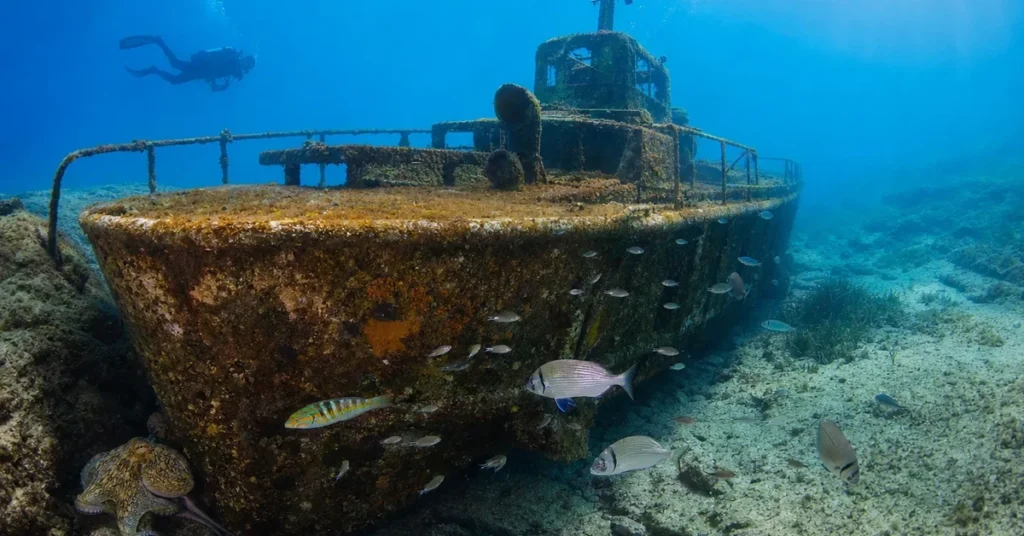
Certification provides the foundation for scuba diving, but divers can continue developing by gradually gaining experience in conditions that differ from those they usually encounter.1 A change of environment can affect preparation, equipment use and comfort in the water, creating new challenges for divers to manage.1
The value does not come from seeking difficulty for its own sake, but from controlled exposure to conditions that demand a different kind of attention.1 Currents emphasize planning and navigation, wrecks challenge buoyancy and situational awareness, and cold water requires adaptation to a different environment and equipment.1
What to Know When Working to Become a Better Diver 1
A new environment can sharpen existing skills while helping divers gain experience across a wider range of conditions.1 The differences may begin during dive preparation, continue through the choice of equipment and influence how the dive itself is conducted.1
That does not mean every environment is suitable for every diver or that every challenge should be attempted immediately.1 The source presents different environments and specialty courses as ways to develop, so they are best understood as progressive routes for building experience rather than shortcuts.1
Diving in Currents Sharpens Planning, Navigation and In-Water Skills
Current can make many parts of a dive more demanding, including entries, exits, physical effort, navigation and maintaining position underwater.1 Appropriate exposure to current can therefore sharpen dive planning and the skills divers use while in the water.1
Learning to read the current and work with it can build confidence, but this ability does not develop simply by arriving at a site where current is present.1 The developmental value comes from facing conditions suited to the diver’s experience and understanding how those conditions change planning and navigation.1
Wreck Diving Challenges Buoyancy, Navigation and Situational Awareness
Diving a wreck is a different experience from diving an open reef.1 An unfamiliar layout, darkness, confined spaces and swim-throughs can test buoyancy control, navigation and awareness of what is happening around the diver.1
Even when the goal is only to observe the remains of a vessel, the environment demands attention to its layout and to the diver’s position in the water.1 The developmental benefit of wreck diving therefore lies not only in the unusual sights, but also in using skills that may be less central during an ordinary reef dive.1
It is important to distinguish between viewing a wreck and entering its spaces or swim-throughs.1 The source identifies darkness, confined spaces and swim-throughs as challenging factors and points divers toward dedicated wreck-diving training.1
Cold-Water Diving Opens a Different Underwater World and Builds Adaptability
Cold water introduces divers to different environments and marine life while potentially requiring specialized equipment.1 Together, these differences create an opportunity to become more adaptable instead of relying only on experience gained in warm, comfortable water.1
Changing from a wetsuit to a dry suit affects how a diver manages buoyancy, equipment and thermal protection.1 Cold-water diving is therefore not merely the same dive at a lower temperature, but an environment with different demands that calls for appropriate learning.1
What About Caverns and Overhead Environments? 1
The source discusses cavern diving within the natural-light zone rather than treating it as equivalent to full cave diving.1 This environment can challenge buoyancy, trim, navigation and situational awareness while offering visual experiences unlike those found in open water.1
That distinction matters because an overhead environment is not an ordinary extension of open-water diving.1 According to the source, cavern diving introduces divers to the natural-light zone without entering the realm of cave diving, and it is presented alongside dedicated training.1
Safety and Responsibility in the Water
Experience in a new environment can support a diver’s development only when the challenge matches the diver’s training and experience.1 The source distinguishes between destinations suited to different experience levels and notes that sites with strong currents are more appropriate for experienced divers.1
The same principle appears in its references to dedicated training for currents, wrecks, dry suits and caverns.1 Choosing the next environment should therefore depend both on what it can teach and on whether the diver has suitable training and experience for the expected conditions.1
Ultimately, better divers are not necessarily those who seek the hardest conditions, but those who gradually broaden the range of environments in which they can operate.1 Currents, wrecks, cold water and caverns can each provide different lessons, with every environment emphasizing different skills and requiring a responsible approach.1
Sources
Explore our canvas prints
Underwater Photography

Underwater Photography
Underwater Photography