

Blog
The First Hundred Dives: What Changes Along the Way
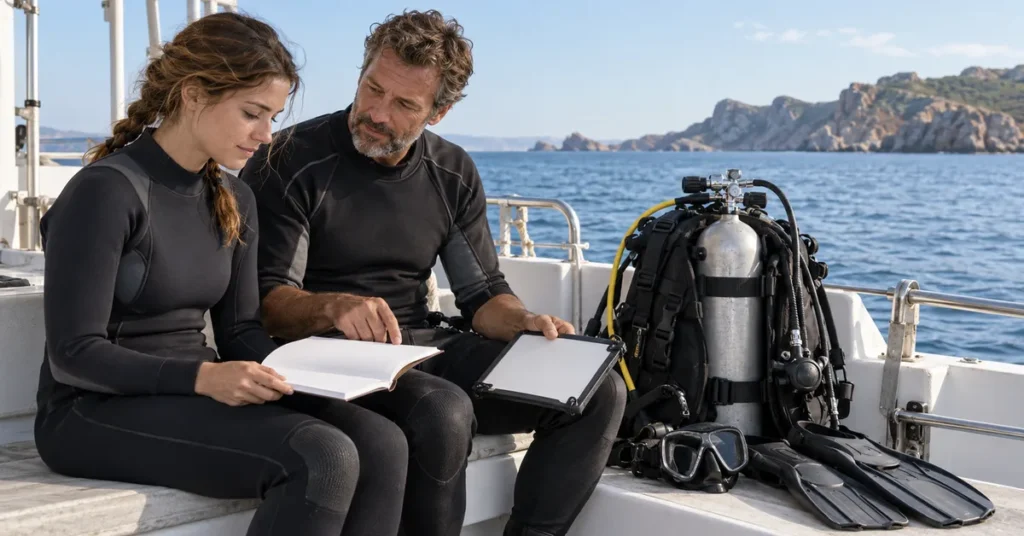
The path from the tenth dive to the hundredth is not the same for everyone. A dive count alone does not reveal what a diver knows, which conditions they have encountered, or how comfortable they feel in the water. Without verified sources, it is impossible to claim that a specific professional change must happen at a particular milestone. It is better to treat these markers as invitations to pause, reflect, and speak with a qualified instructor—not as automatic steps up a ladder.
The goal is not to rush toward a larger number in the logbook. A more useful question is what each dive can teach you, which habits still need attention, and which conditions remain unfamiliar. Seen this way, the first hundred dives can become a deliberate learning process rather than a list of water entries.

What to Consider Before Diving
Before each dive, distinguish between recorded experience and readiness for that particular dive. A diver may know one environment well but encounter different conditions, equipment, or requirements somewhere new. There is no universal formula: suitability depends on training, personal circumstances, site conditions, and the framework of the dive.
Instead of asking only, “How many dives do I have?”, prepare a short list of questions. Are these diving conditions familiar? Has a long time passed since my last dive? Is there anything about the equipment or plan that I do not fully understand? Do I feel free to say that I am not ready? These questions do not replace a briefing, training, or professional judgment, but they can help reveal gaps before entering the water.
Between Dives Ten and Thirty: Build an Honest Picture
At a relatively early stage, the aim is not to prove independence but to identify what still requires guidance. After every dive, write a few lines about what felt simple, what took effort, where confusion arose, and which question should be raised with an instructor. The logbook then becomes more than a counter; it becomes a way to recognize patterns.
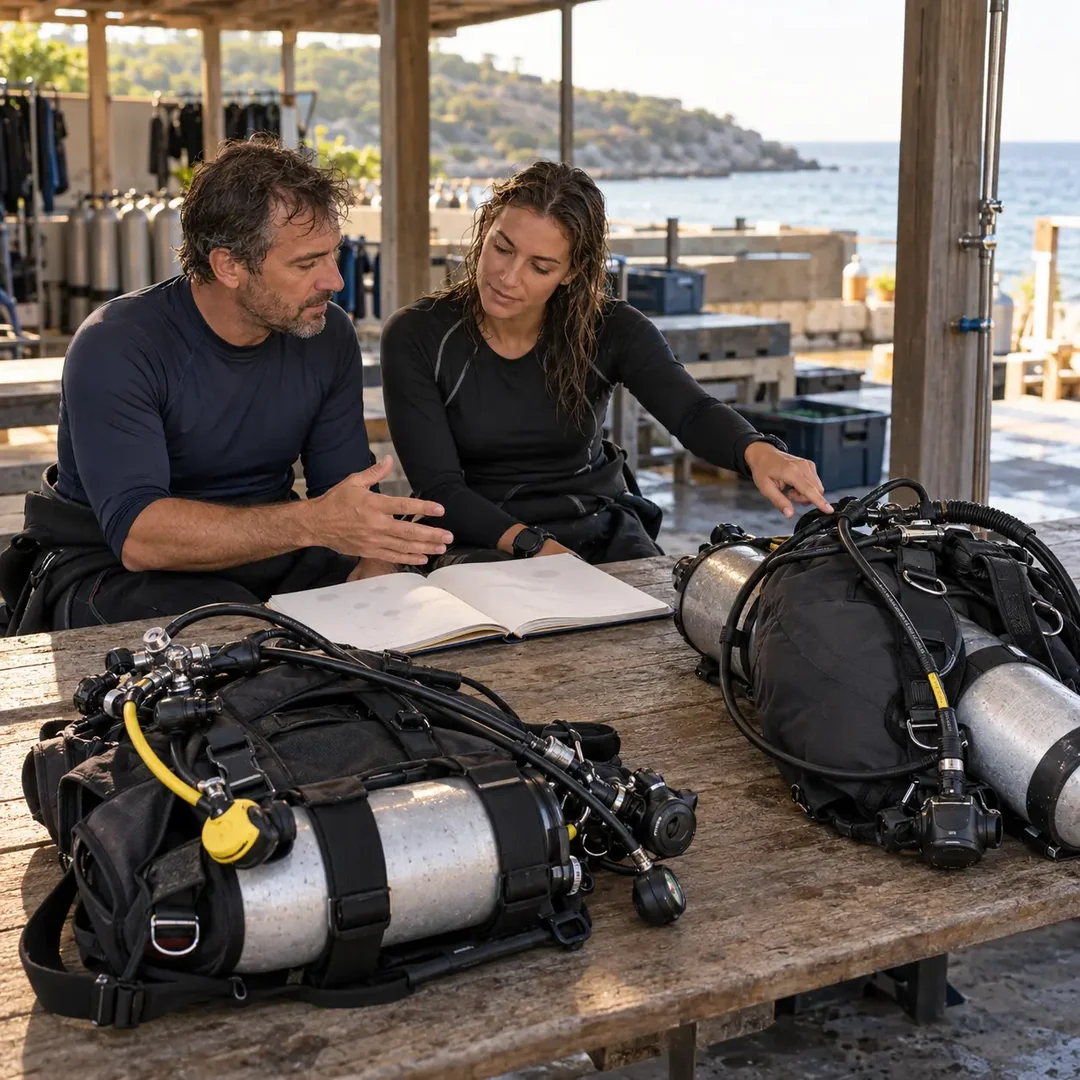
Choose one point to observe on each dive without inventing a technical exercise for yourself. You might notice when your workload increases, which parts of the briefing remain unclear, or whether communication with your dive buddy feels natural. When a practical difficulty emerges, the safe way to work on it is through suitable instruction and within the limits of your existing training.
This is also a useful time to examine your pace. A new diver does not have to join every offered dive or progress simply because others in the group are moving ahead. Staying in familiar territory, asking for another explanation, or deciding not to make a particular dive can all be part of responsible learning.
Between Thirty and Sixty: Expand Without Skipping Steps
As dives accumulate, familiar routines can begin to feel self-evident. That is a good moment to ask whether the routine rests on understanding or imitation. Consider which decisions you can explain and when you are still acting mainly because someone else did the same thing.

Broadening your experience does not have to mean jumping into more complex conditions. It can mean gradually becoming familiar with a new site, a different briefing style, or an unfamiliar team—always within a setting that matches your training and ability. Before a change, clarify what is genuinely new, who is responsible for instruction, and what would cause you to stop and reassess the plan.
You can also examine the quality of communication. Is it easy to admit that you did not understand? Can you describe what concerns you? Does everyone agree on the plan? You do not need a positive answer to every question; identifying a point of friction gives you a clear subject for a professional conversation.

Between Sixty and One Hundred: Turn Experience into Judgment
A larger number in the logbook can create confidence, but it does not remove the need to assess every dive individually. Experience may cover many situations or repeat the same kind of dive. Look beyond the total and consider the range of situations you have encountered, what remains unfamiliar, and where a refresher may be needed.
Instead of searching for a single “advanced stage,” map three areas: things you understand and can explain, things you do only in familiar settings, and things that still require instruction. This map is not a certificate; it is a temporary snapshot. It may change after a break, a switch to different equipment, or entry into a new environment.
As the hundredth dive approaches, the interesting question is not whether you have become an experienced diver, but whether you have developed a sound way to keep learning. Can you review a dive without assigning blame, request feedback without becoming defensive, and distinguish confidence from genuine familiarity? These are open questions that each diver should explore with professionals who understand their training and diving context.

Safety and Responsibility in the Water
Because no verified professional sources were provided for this article, it does not offer emergency procedures, depth limits, gas-consumption instructions, or equipment drills. For those subjects, follow the relevant training, local briefing, and guidance of a qualified instructor. Equipment care should likewise follow the manufacturer’s instructions for the specific model or be handled by authorized service when needed.
Responsible planning also includes genuine permission to change the plan or not dive. If health, discomfort, a gap in understanding, or site conditions create doubt, a general article cannot replace a qualified professional familiar with the situation. The number in a logbook does not answer that question.
Frequently Asked Questions
Does the Hundredth Dive Make Me an Experienced Diver?
There is no universal threshold that can be established here without an appropriate professional source and context. A dive count alone does not describe the variety of conditions, continuity of activity, or quality of learning. Treat it instead as a point at which to pause and assess abilities and gaps.

What Should I Practise at Each Stage?
Without verified sources, this article cannot prescribe a particular technical exercise. Bring an instructor a list of situations that caused workload, confusion, or uncertainty, and work with them to build practice suited to your training and needs.
How Do I Know When It Is Time to Progress?
There is no single answer for everyone. Consider what the next dive requires, what is already familiar, what is new, and what guidance is available. If those answers are unclear, pause and seek clarification rather than guessing.
The first hundred dives are not a race toward a round number. They are an opportunity to build habits of curiosity, documentation, and thoughtful questioning. In diving, sound progress is not only about reaching the next stage; it is also about recognizing what you do not yet know and choosing to learn it in the right setting.
Explore our canvas prints


Underwater Photography


Underwater Photography


T-Shirts


Underwater Photography