

Blog
Polish Diver Breaks Cave-Diving Depth Record with 338-Metre Descent
Polish diver Bartłomiej Pitala reached a depth of 338 metres in the Matka Vrelo underwater cave system in North Macedonia.1 The achievement exceeds the previous cave-diving record, although it had not yet been officially ratified as a Guinness World Record when the report was published.1 Beyond the remarkable number, the dive was a complex cave-exploration operation involving extensive planning, redundant equipment and a large support team.1
What Divers Should Know First
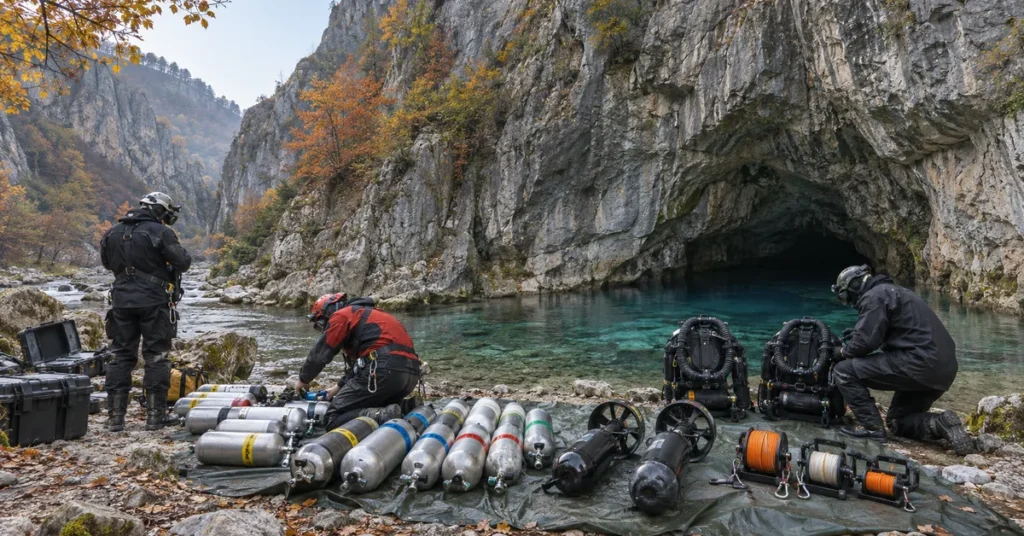
The record-breaking dive was conducted during a joint expedition by Poland’s BAD Exploration Team and the local diving organisation Club Vrelo, following months of preparation.1 Before the main attempt, Pitala completed four preliminary dives to depths of 150, 190, 240 and 290 metres to refine the decompression schedule, emergency procedures and equipment distribution.1
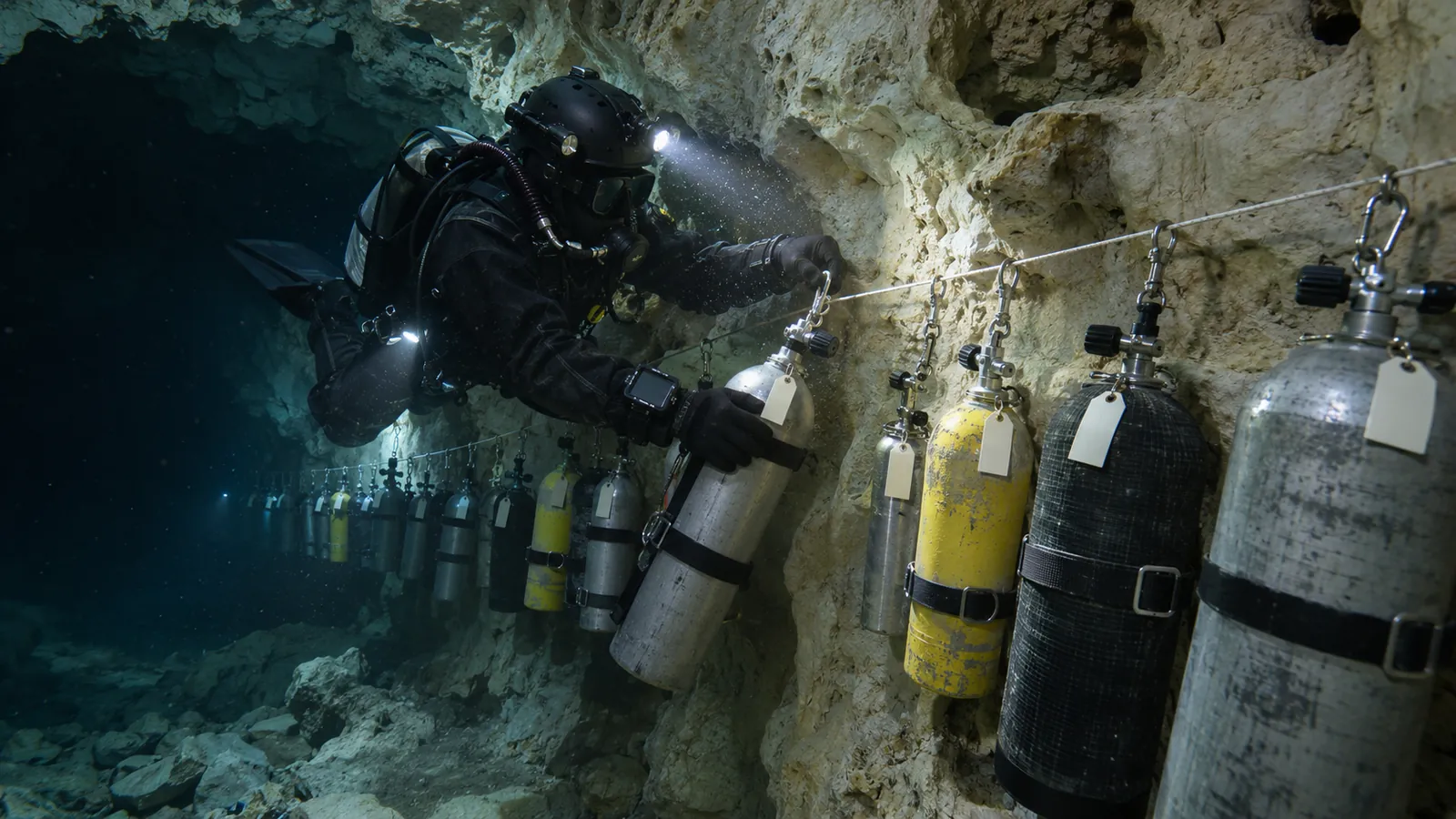
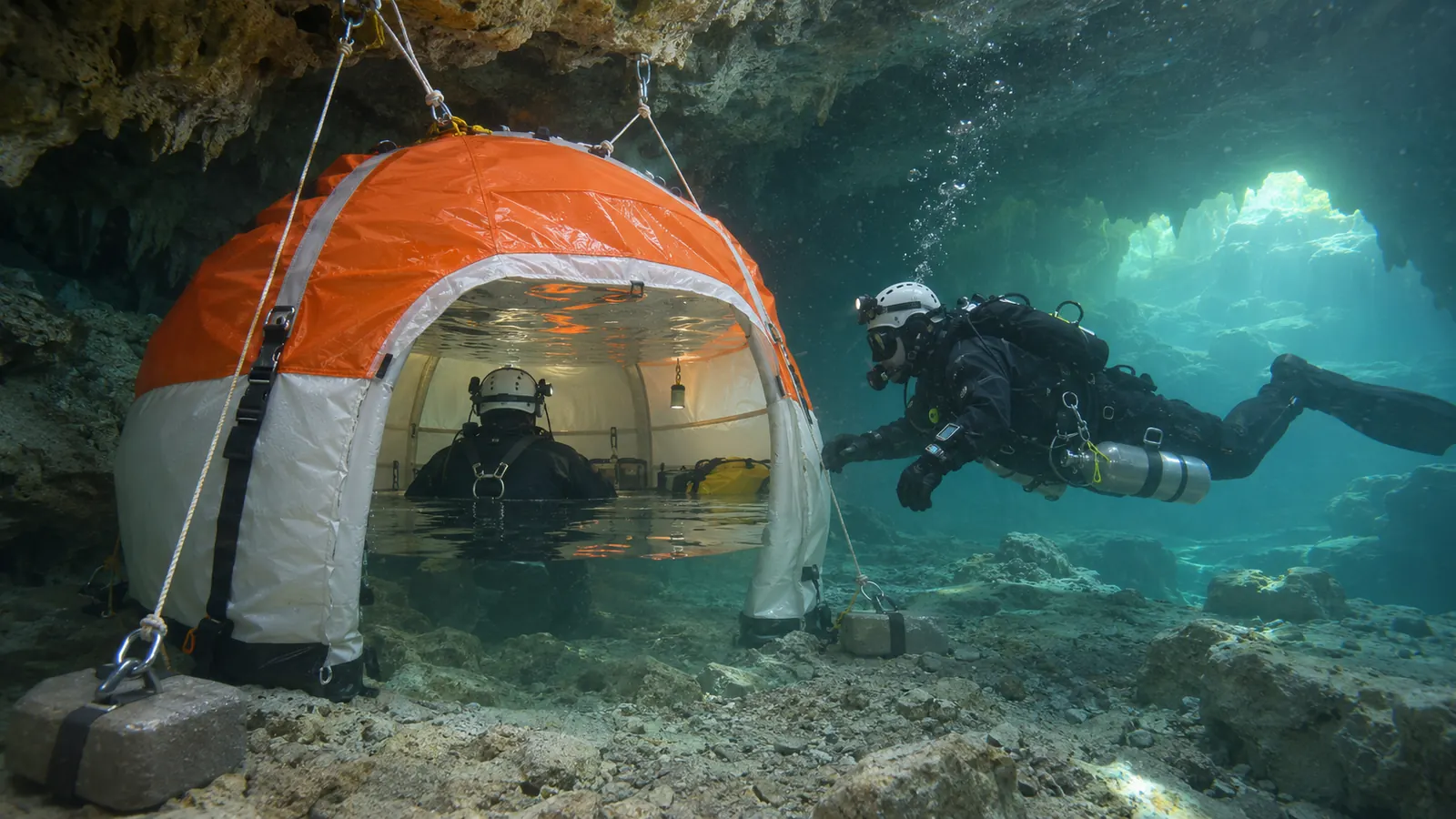
More than 25 emergency breathing-gas cylinders were positioned inside the cave down to a depth of 180 metres, while support divers were stationed along the ascent route.1 The team also prepared an air-filled underwater habitat at eight metres, intended to let Pitala complete part of his decompression in a warm environment if his drysuit failed or another problem arose during the ascent.1
The Matka Vrelo cave-diving record still awaits official ratification 1
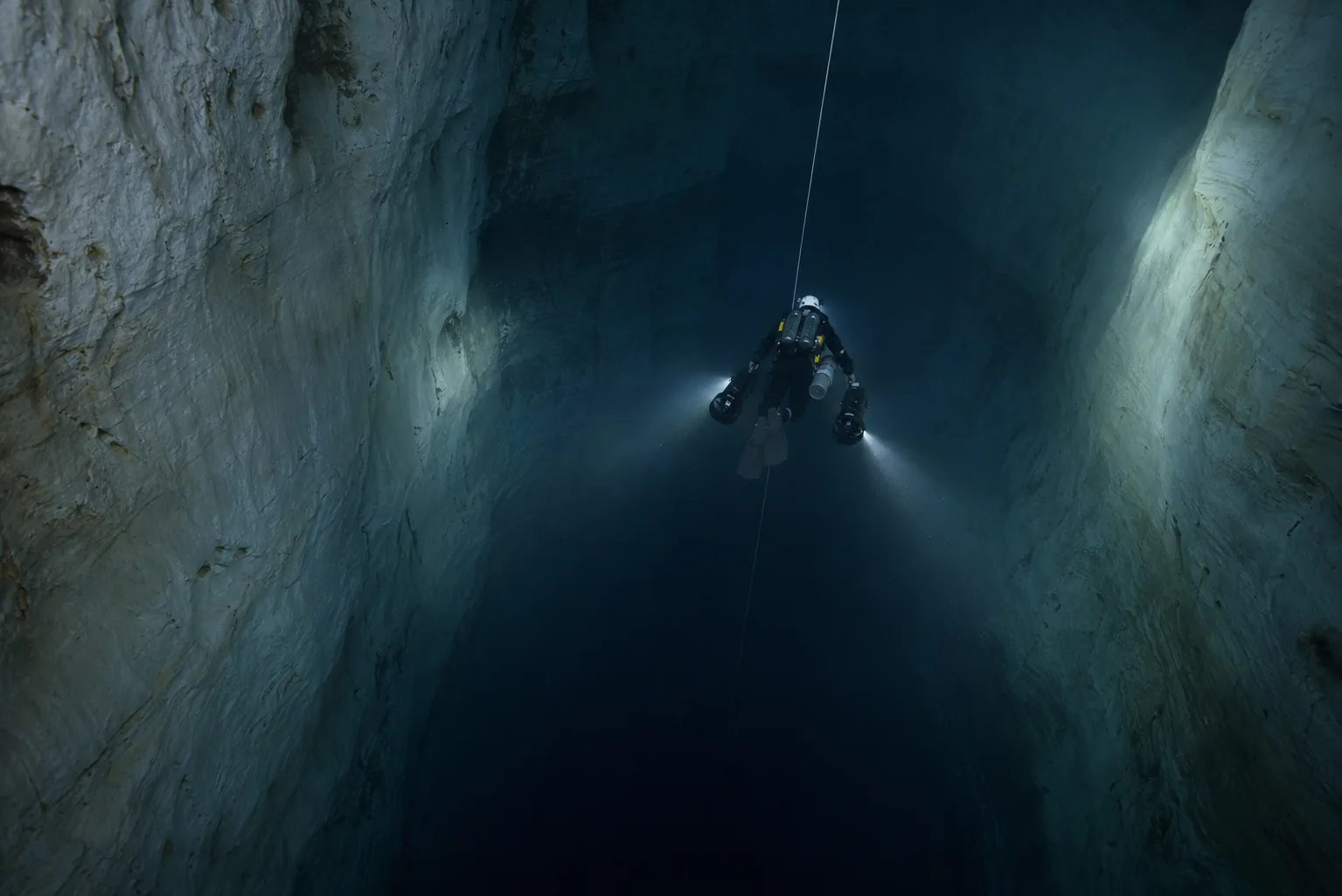
Pitala reached 338 metres in Matka Vrelo, with his dive computer recording a depth 26 metres beyond the previous cave-diving record.1 Another account of the expedition credits the team with exploring approximately 150 metres of new cave passage, including two previously unknown channels.2
The dive began shortly after 10 a.m. on 16 October, with support divers accompanying Pitala to a point 350 metres inside the cave and 24 metres deep.1 From there, he continued alone through the main shaft using two diver propulsion vehicles.1 His primary breathing system was a back-mounted Liberty closed-circuit rebreather, backed up by a sidemount Liberty system and another bailout unit delivered to him at 140 metres.1
The Previous Record Was Set in 2024 3
The previous benchmark in cave diving was French diver Xavier Méniscus’s descent to approximately 312 metres in Font Estramar in 2024.3 Pitala’s reported depth of 338 metres exceeds that result by about 26 metres, but formal verification of the new achievement remains separate from the depth reported by the expedition.3
The dive also went 51 metres beyond Pitala’s own previous depth in Matka Vrelo: 287 metres during a 2025 expedition.1 The team’s objective was to extend exploration beyond the 300-metre mark, and Pitala wrote that they had not expected such a deep result before the dive.1
Pitala Reported No Symptoms of HPNS 1
The preliminary dives were intended partly to test Pitala’s possible response to high-pressure nervous syndrome, or HPNS, which can occur while breathing a helium-containing gas under high pressure.1 According to the source, its symptoms can include tremors, dizziness and impaired coordination.1
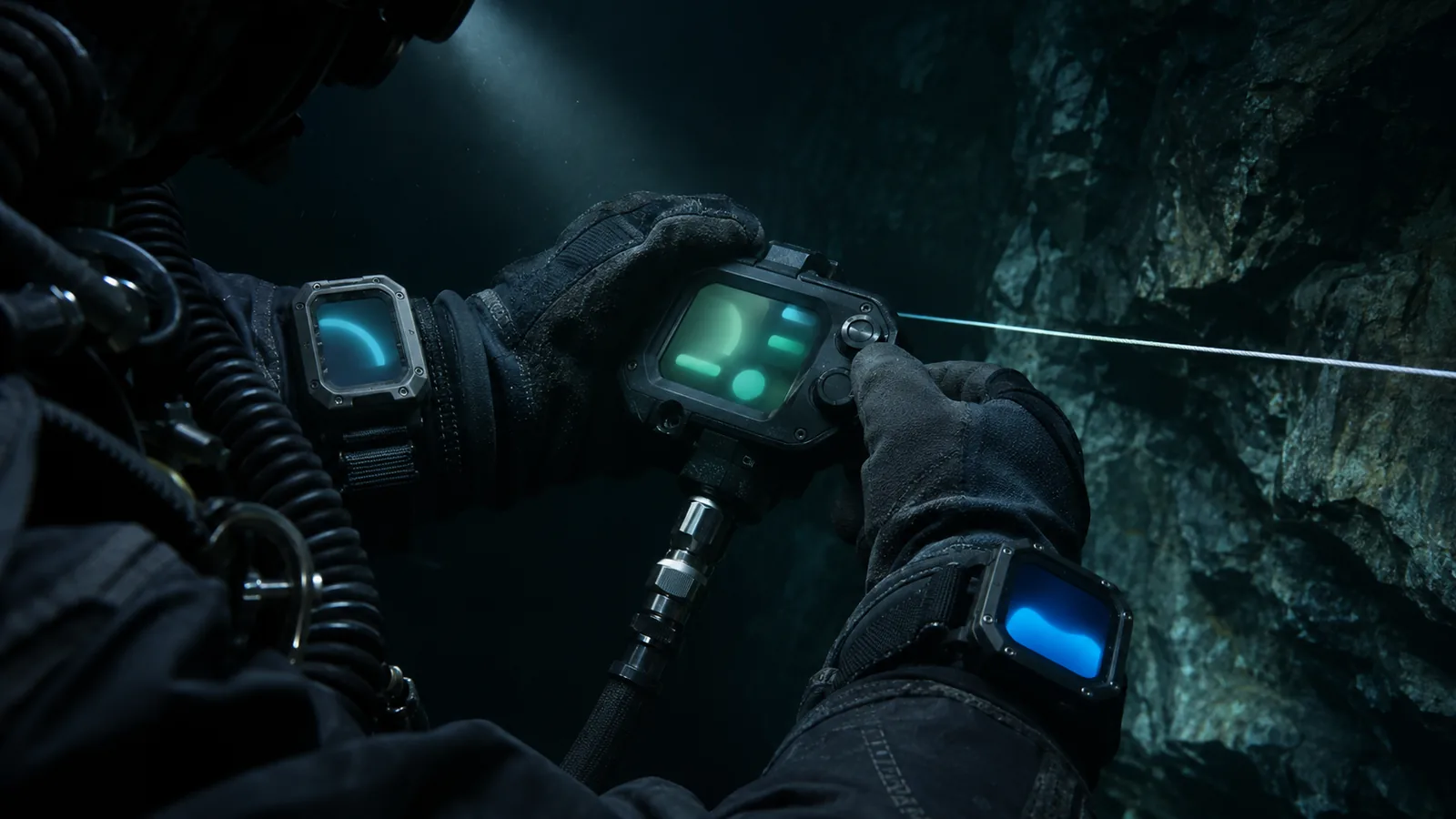
Pitala reported no visual impairment or other HPNS symptoms in the deepest part of the dive, and said gas density did not cause him problems.1 In another interview, he described simultaneously monitoring the passage, his instruments, the propulsion vehicles and his own condition.3 This was the diver’s account of this particular dive, not evidence that such depths are free of risk.1
The Cave Continued Down Beyond 338 Metres 3
Pitala did not reach the cave floor or the end of the passage, which was still descending when he turned around.3 He explained that he stopped at 338 metres because he did not want to test the equipment’s limits any further, particularly the strain placed on the propulsion vehicles.3
Before the dive, the team had calculated an exploration window of up to 45 seconds in the new section to keep the total dive time within its planned limit.1 Pitala said he still had roughly twenty seconds available at maximum depth but chose to return.1 The achievement therefore marks the deepest point reached by a person in the cave, not the final depth of the Matka Vrelo system.3
Safety and Responsibility in the Water
The return to the surface involved more than eight hours of decompression, accompanied by support divers.1 Pitala slowed his ascent from 210 metres and said this decision added approximately an hour and a half to his planned decompression obligation.1 He reported no decompression problems in the water or after surfacing and ultimately did not need to use the prepared underwater habitat.1
The operation also included medical and rescue personnel, a hyperbaric chamber on standby and a helicopter made available to the expedition.2 The support structure, preliminary dives and redundant systems make clear that this was not a dive from which recreational divers can derive operating instructions.1 It was an extreme cave-exploration project conducted by a dedicated team, and its reported achievement must still be distinguished from an officially ratified record.1
Sources
- Polish cave diver breaks world scuba depth record with 338m descent – DIVE Magazine
- World record set at the underwater Vrelo cave in Matka
- Bartłomiej Pitala zanurkował na 338 metrów. Jaskinia wciąż prowadziła głębiej
Explore our canvas prints

Underwater Photography

Underwater Photography




Underwater Photography