

Blog, Underwater, Wildlife
Mediterranean Sharks: Species, Habitats and Diving
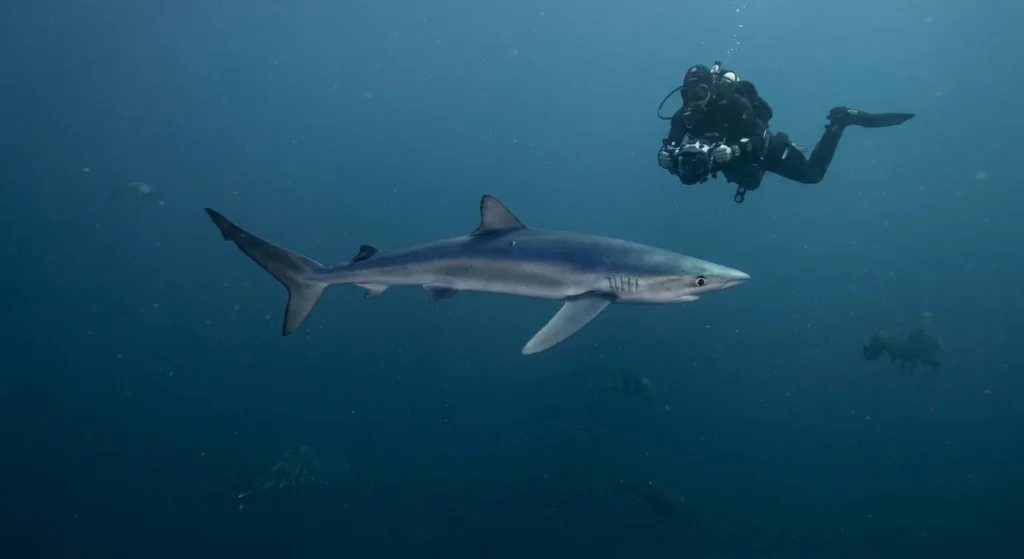
Sharks of the Mediterranean
Sharks are an essential part of the Mediterranean’s marine ecosystem. Despite their fearsome reputation, most species pose little danger to people and play an important role in keeping marine populations in balance.
Contents
This guide introduces the main species, their habitats, conservation concerns and responsible diving practices. Shark encounters in the Mediterranean are relatively uncommon, which makes seeing one a moment many divers remember for years.
Key Shark Species
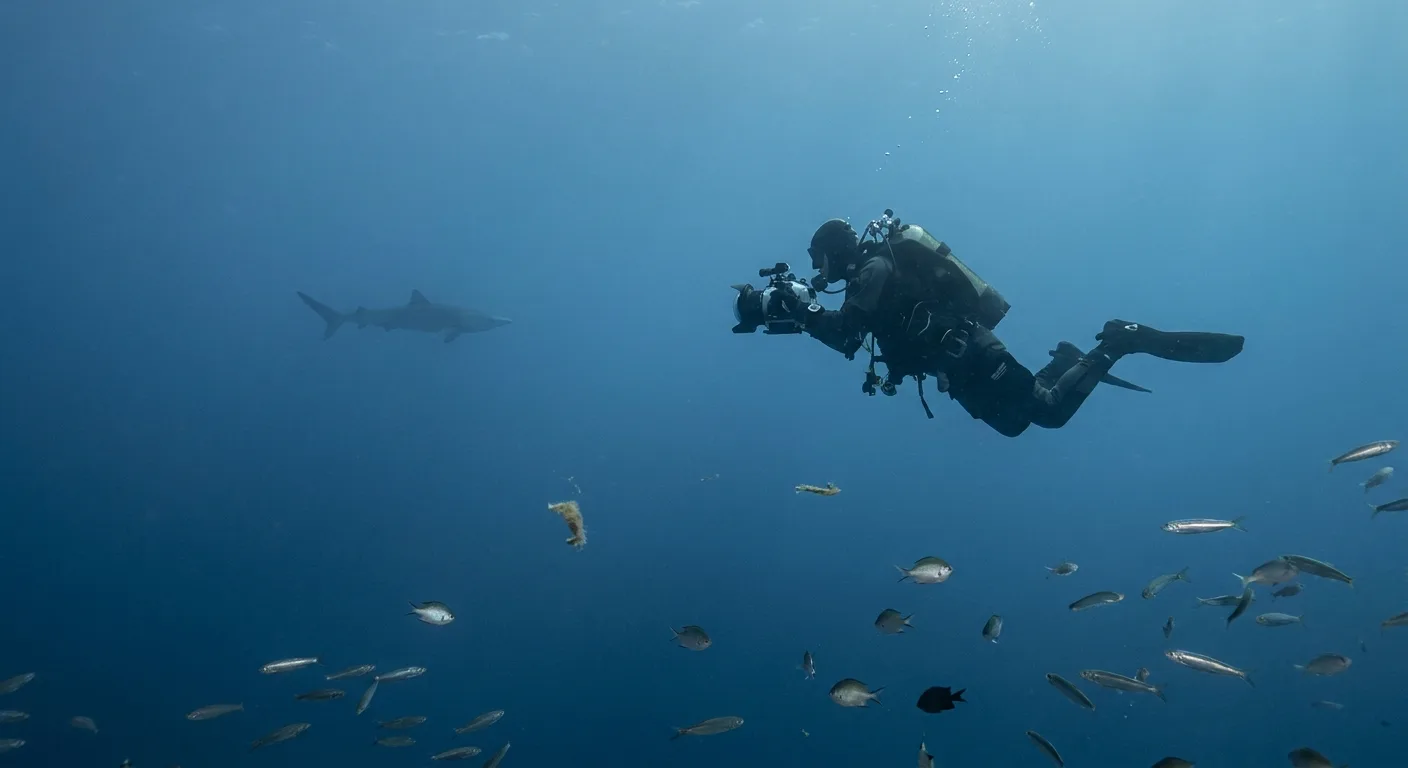
The Mediterranean is home to several fascinating sharks. The great white shark (Carcharodon carcharias) is among the largest and best known. Sightings are rare, but it occurs in parts of the eastern Mediterranean.
The blue shark (Prionace glauca) is more common. It lives in open water across a range of depths. Off Hadera, the documented seasonal aggregation includes dusky sharks (Carcharhinus obscurus) and sandbar sharks (Carcharhinus plumbeus).
Hammerhead sharks (Sphyrna spp.) have a distinctive head shape that helps them sense their surroundings. IUCN reports that Mediterranean shark populations face substantial pressure from overfishing.
The angular roughshark (Oxynotus centrina) lives in deep water and is rarely seen. The kitefin shark (Dalatias licha) occurs at greater depths. Another species, the sand tiger shark (Carcharias taurus), sometimes appears in shallow coastal waters.
Habitats and Depths
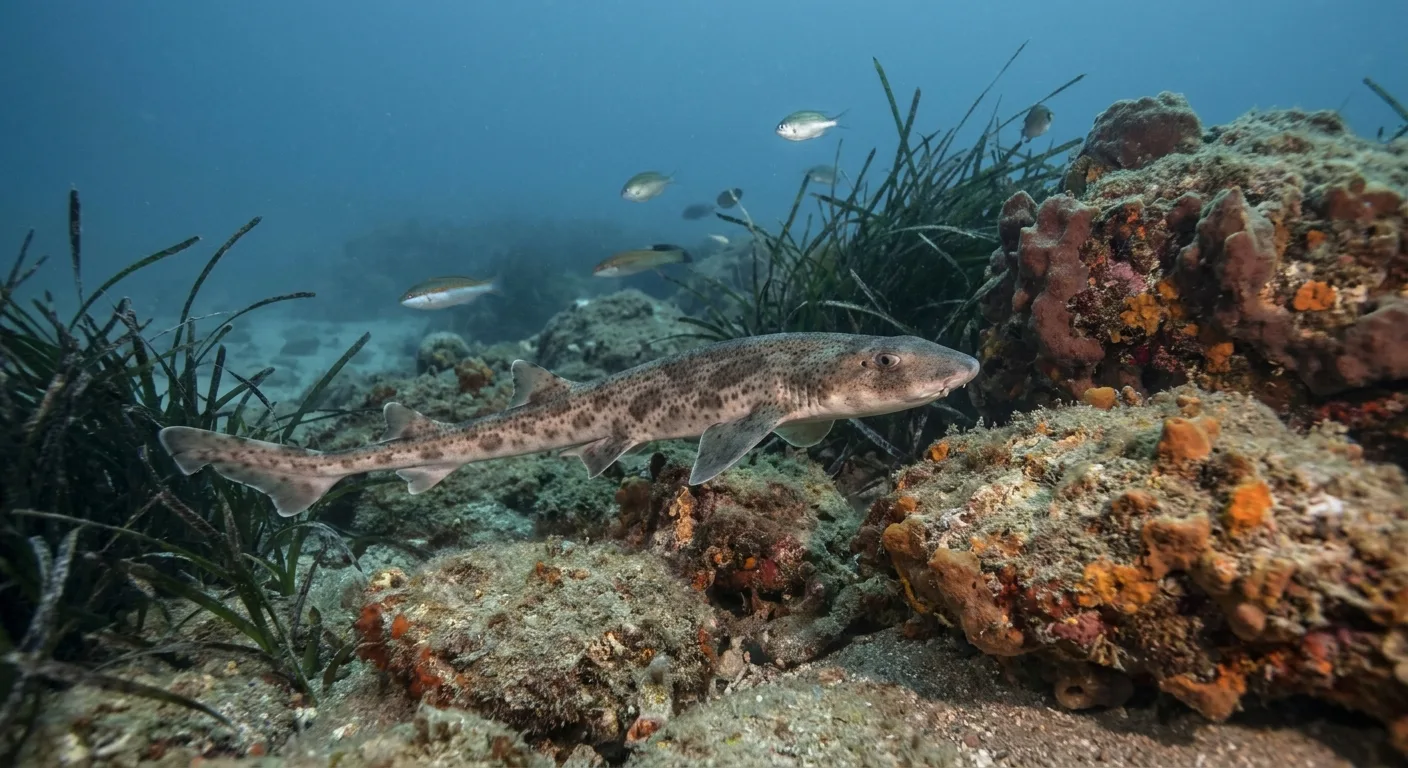
Mediterranean sharks occupy a wide range of habitats. Some stay close to shore in shallow water, while others move through deeper areas. Temperature preferences and seasonal movements vary by species.
Blue sharks are often found in open water. The depth at which divers encounter them varies with sea conditions. At Hadera, sharks gather near the power station’s warm-water outflow in winter.
Habitats include rocky reefs, sandy seabeds and deep water with strong currents.
Behaviour, Diet and Conservation
Shark diets and activity patterns vary by species. Encounters with these wild animals are unpredictable; apparent calm is not a safety guarantee.
Conservation is a pressing concern. IUCN reports that some Mediterranean shark species are threatened with extinction. Major pressures include illegal fishing, plastic pollution and warming water that alters food webs.
In Israel, the Nature and Parks Authority works to protect these species through fishing restrictions and marine reserves. For more on marine animals that deserve space, read5 Marine Animals You Should Not Touch.
Sharks help maintain healthy seas by regulating populations of weak and sick fish. Their loss can disrupt the wider ecosystem. Overfishing has sharply reduced many populations, with effects throughout the food web.
Diving With Sharks: Preparation and Safety
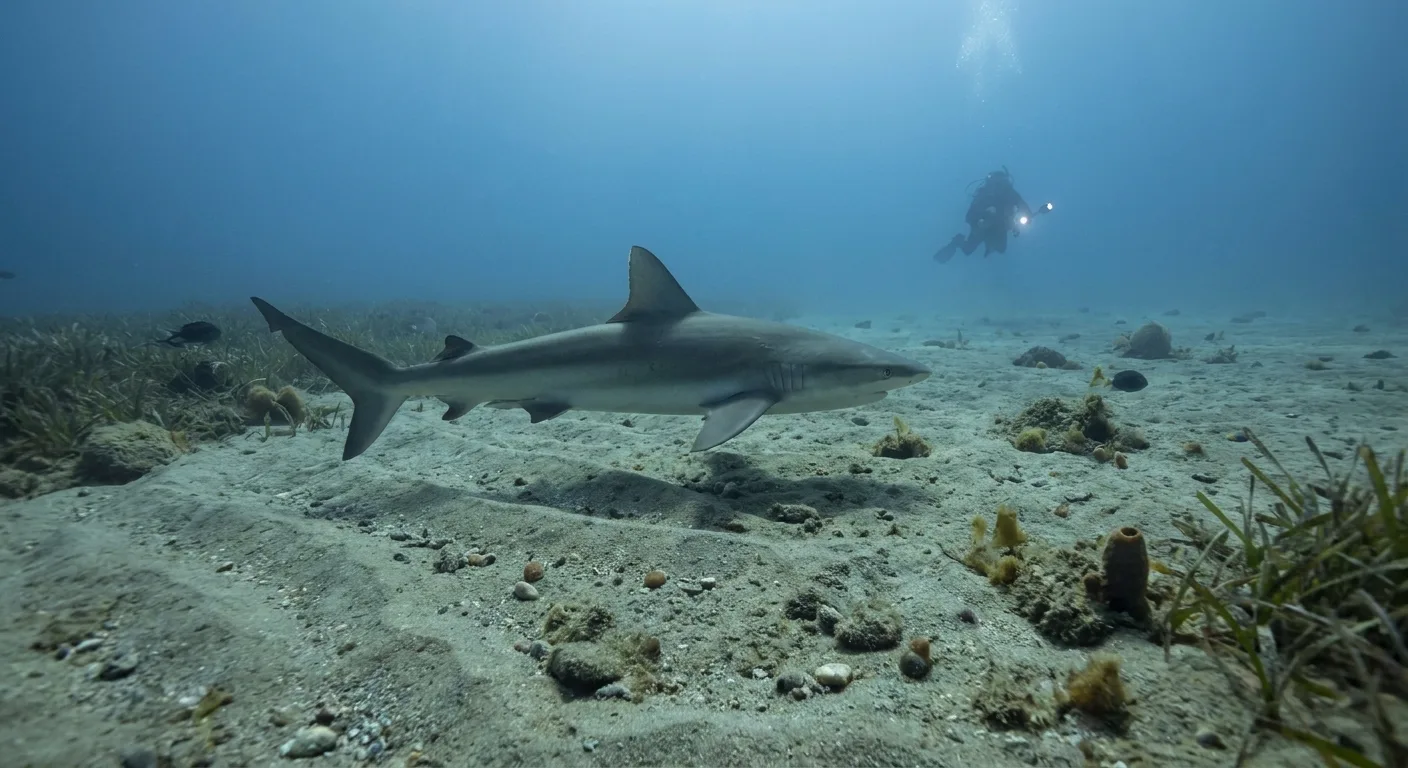
Site restrictions come first. Swimming is prohibited in the Hadera river-mouth area, and the Israel Nature and Parks Authority warns against diving near the sharks there, including for professional divers. Where diving is permitted, keep your distance and never feed, touch or pursue a shark.
Follow local restrictions and your guide’s instructions. A guide, training and equipment do not remove site hazards. For more on responsible diving, exploreDive into the Silent World.
Where to See Sharks
Shark sightings depend on the species and location. Hadera’s winter aggregation is well documented, but it is not a reason to enter the water there. By contrast, the Red Sea has a different marine community.
Observe sharks from shore where possible and follow local guidance. For a separate introduction to diving after dark, readNight Diving Tips.
Further Safety Considerations
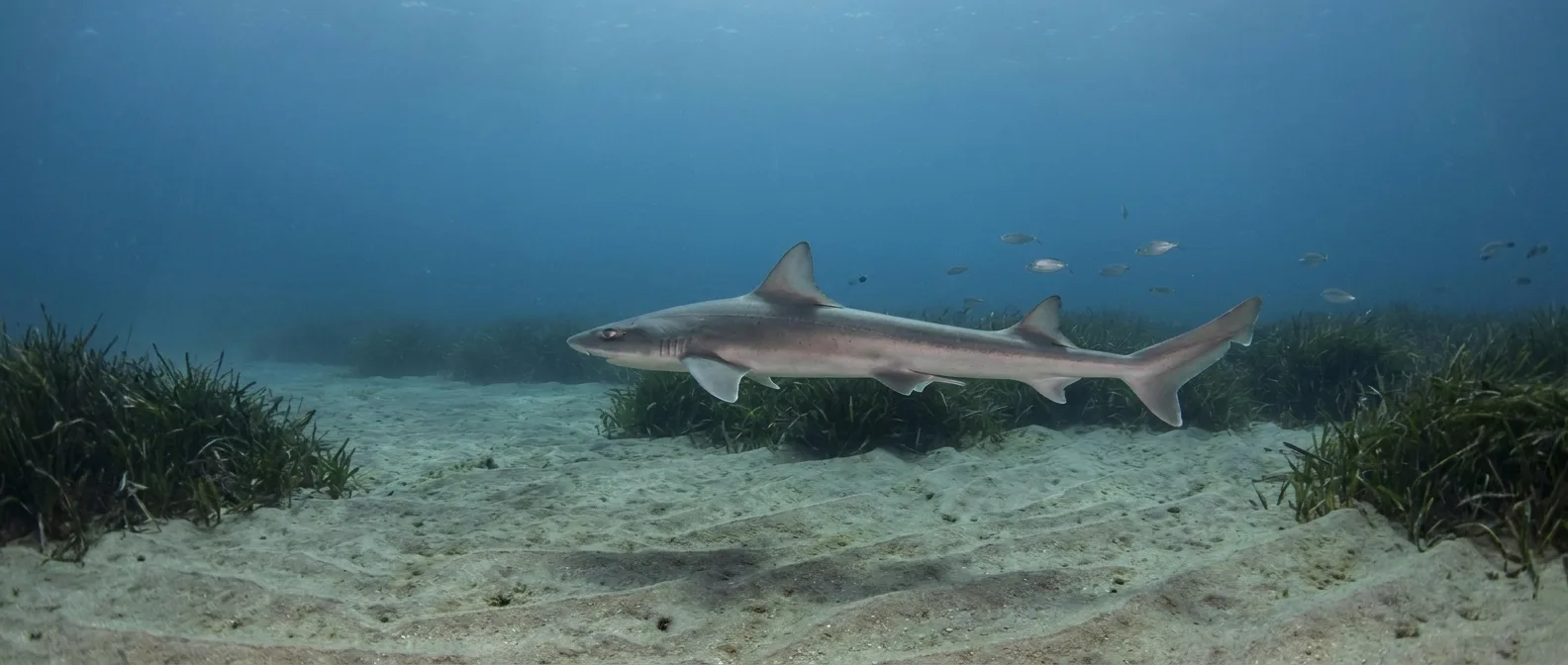
Check your equipment before entering the water and keep your ascent slow. Check local restrictions before considering any dive in an area known for sharks. Never go alone, and report sightings to the authorities. Caring for the marine environment is part of every dive.
For more on handling currents, read Tips for Diving in Currents. You can also explore life on protected reefs in Coral Reefs: Cooperation Underwater.
Diving Equipment
Basic equipment includes a suit suited to the water temperature, a buoyancy compensator, a working regulator and a dive computer. Check every item before entering the water. Experienced divers also recommend a reliable compass for navigation.
Protecting Mediterranean Sharks
Conservation measures in Israel include laws against shark fishing and the creation of marine reserves. Divers can contribute by reporting sightings and keeping the sea clean. International organisations such as IUCN monitor populations and publish updated information.
Frequently Asked Questions
Are Mediterranean Sharks Dangerous?
A shark encounter can be dangerous and unpredictable. Do not assume a shark will react only if it feels threatened.
What Depth Is Best for Sightings?
There is no universal best depth. Stay within your training and dive plan; do not go deeper to look for sharks.
Is Diving With Sharks Allowed in Israel?
Rules depend on the site. Swimming is prohibited in the Hadera river-mouth area, and the Nature and Parks Authority warns against diving with the sharks there. Professional supervision does not override restrictions.
How Many Species Live in the Mediterranean?
A considerable variety, including some rarely seen species that need conservation support.
What Should I Do if I See a Shark?
Stay calm, avoid sudden flight and report the sighting to the local authorities.
Is There a Peak Season?
There is no single season for the whole Mediterranean. The aggregation near Hadera’s power station occurs in winter.
How Can I Support Conservation?
Support conservation organisations, report sightings and reduce your use of single-use plastics.
Are Sharks Disappearing From the Mediterranean?
Many populations have declined, and conservation work remains necessary.
Can I Photograph Sharks?
Only where access and photography are permitted. Keep your distance, and never approach, feed or disturb a shark to get a photograph.
Where Can I Read More?
Read Our Story to get to know the photographer behind 2DIVE.

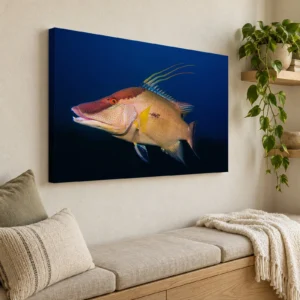
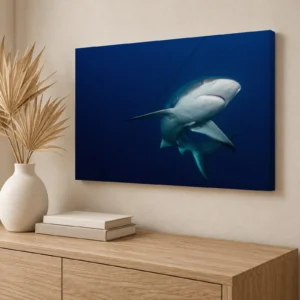
Explore our canvas prints
Underwater Photography

Underwater Photography

Underwater Photography

Underwater Photography