

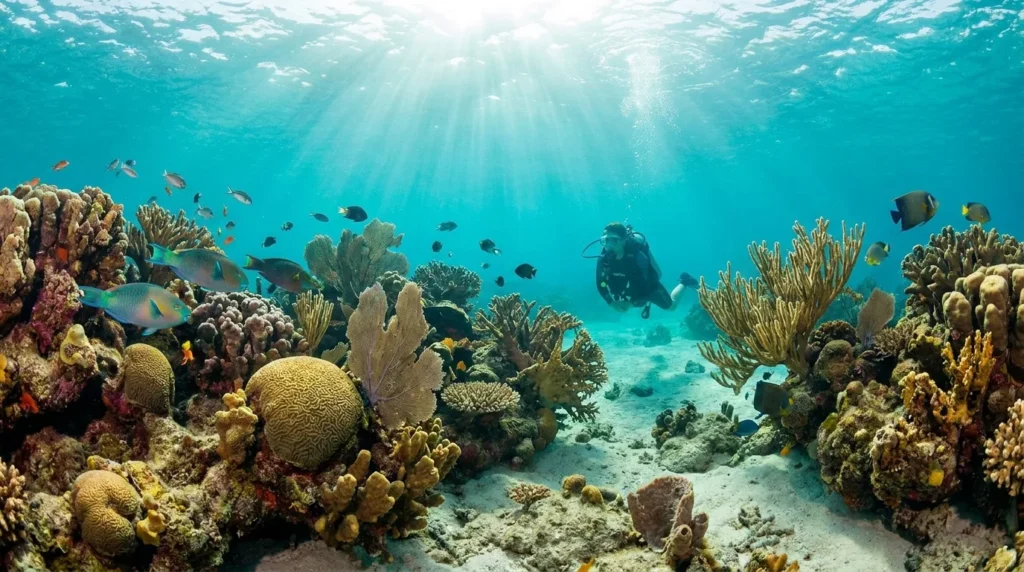
Beauty Best Admired from a Distance
The underwater world is full of color, beauty and remarkable life. As divers, we are visitors, and our first rule is simple: look, but do not touch. It protects both fragile marine habitats and us. Some of the most striking animals are also among the most dangerous. Here are 5 marine animals to give plenty of space.
Contents
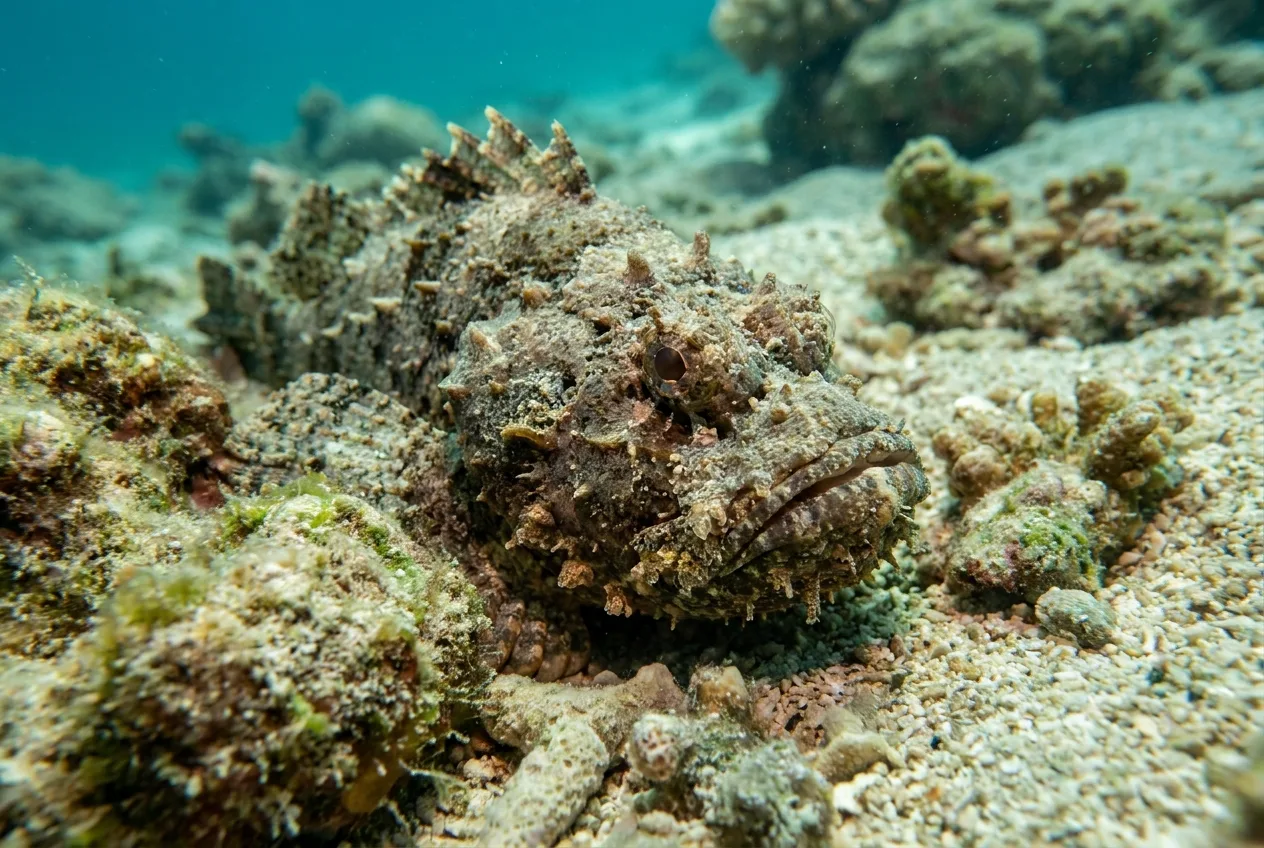
1. Stonefish: A Deadly Master of Camouflage
Stonefish (Synanceia) are considered the world’s most venomous fish. Their camouflage makes them look like rocks or pieces of dead coral. Buried in sand or tucked among rocks, they can be almost impossible to spot. Along the back are 13 sharp spines connected to powerful venom glands. Accidentally stepping on one can cause extreme pain, tissue death, paralysis and, in severe cases, death. Photographs of these fish and their relatives, such as the devil scorpionfish, let us appreciate their beauty while remembering why distance matters.
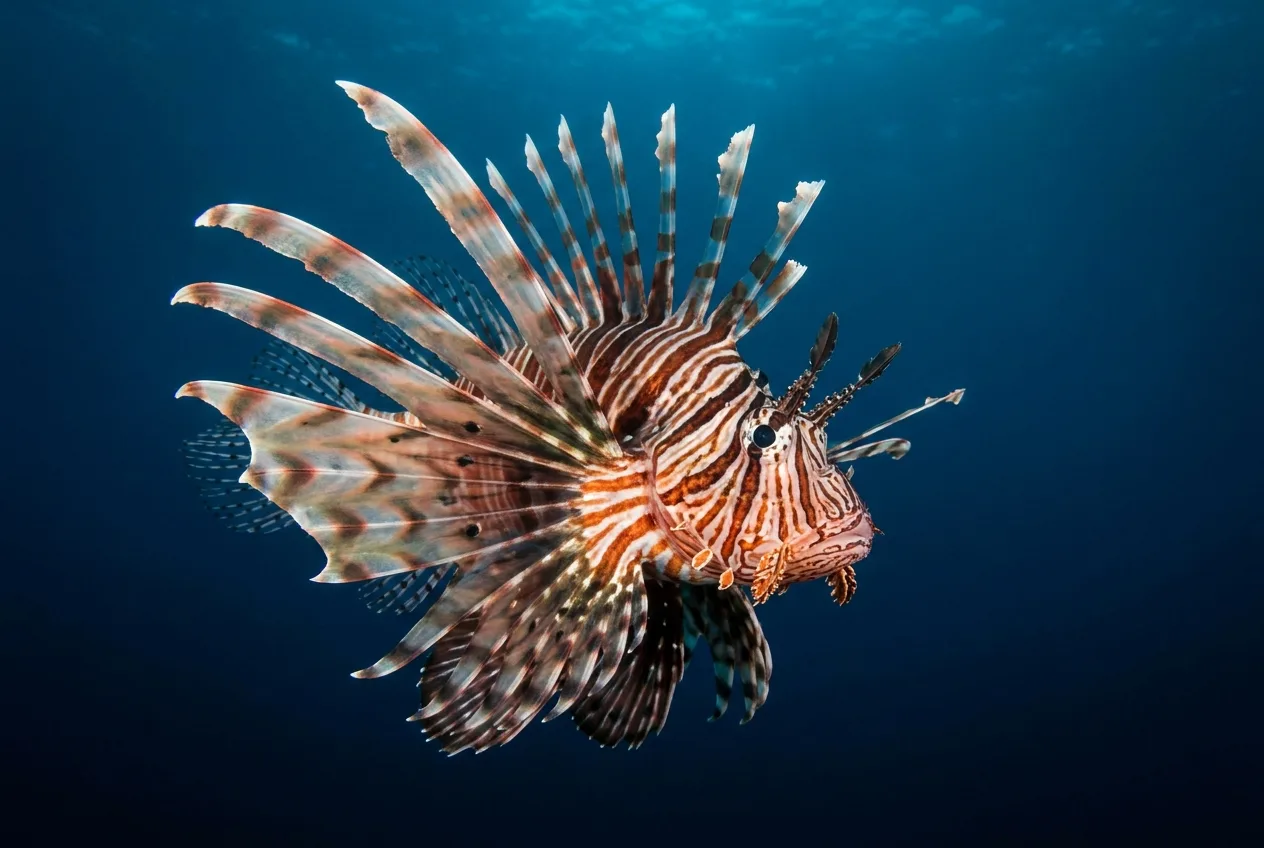
2. Devil Firefish (Lionfish): Beauty with a Warning
With fins spread like an ornate fan, lionfish (Pterois) are among the reef’s most photogenic fish. That beauty comes with a warning: spines on the back and fins carry potent neurotoxic venom. A sting can cause severe pain, nausea, breathing difficulties and, rarely, paralysis. Lionfish are not aggressive, but when threatened they turn their spines toward the threat. Admire them from a safe distance and resist the urge to move too close.
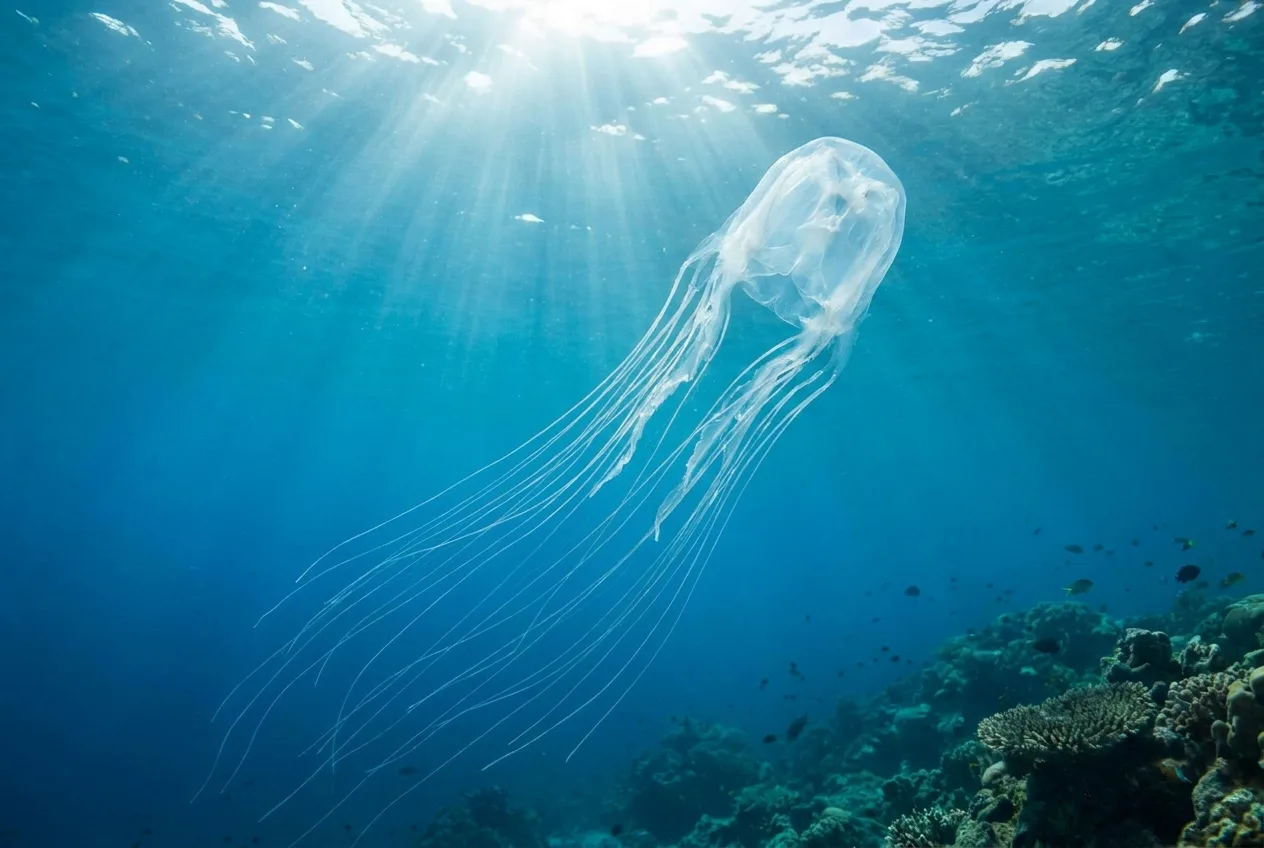
3. Box Jellyfish: A Nearly Invisible Danger
The box jellyfish (Chironex fleckeri), found mainly in the Indo-Pacific, is considered one of the most venomous animals on Earth. Its nearly transparent body makes it difficult to see. Long tentacles are covered in stinging cells, called nematocysts, that release potentially lethal venom on contact. The venom attacks the heart, nervous system and skin cells, and can cause death within minutes. Always check local jellyfish warnings before entering the water.
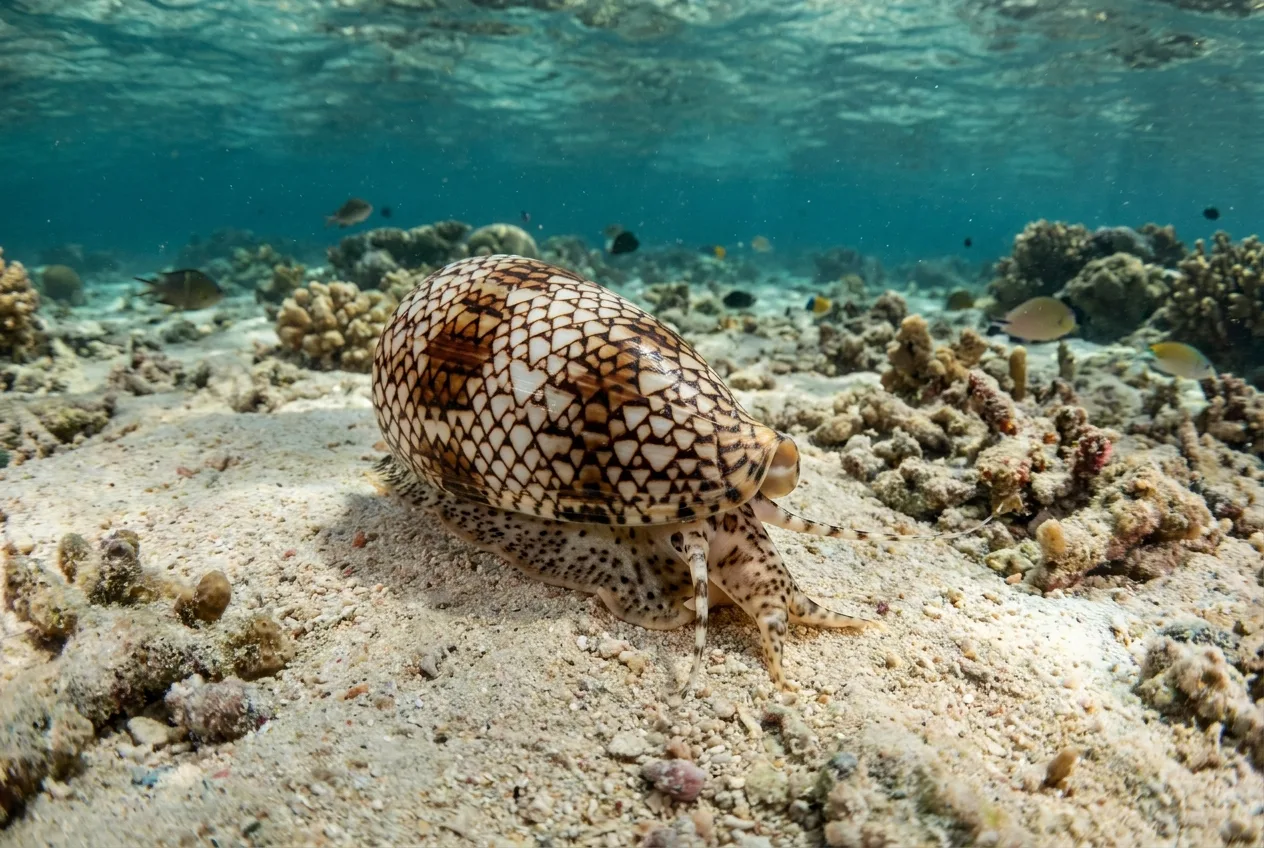
4. Cone Snail: A Beautiful Shell with a Dangerous Inhabitant
Cone shells can look harmless and tempting to pick up. Inside, however, lives a predatory snail that fires a tiny, sharp harpoon loaded with a complex mixture of toxins called conotoxins. Its venom can paralyze muscles, including those used for breathing, and can be fatal. There is no antivenom; treatment focuses on supporting breathing until the toxins wear off. Never pick up shells from the seabed that appear to have a living animal inside.
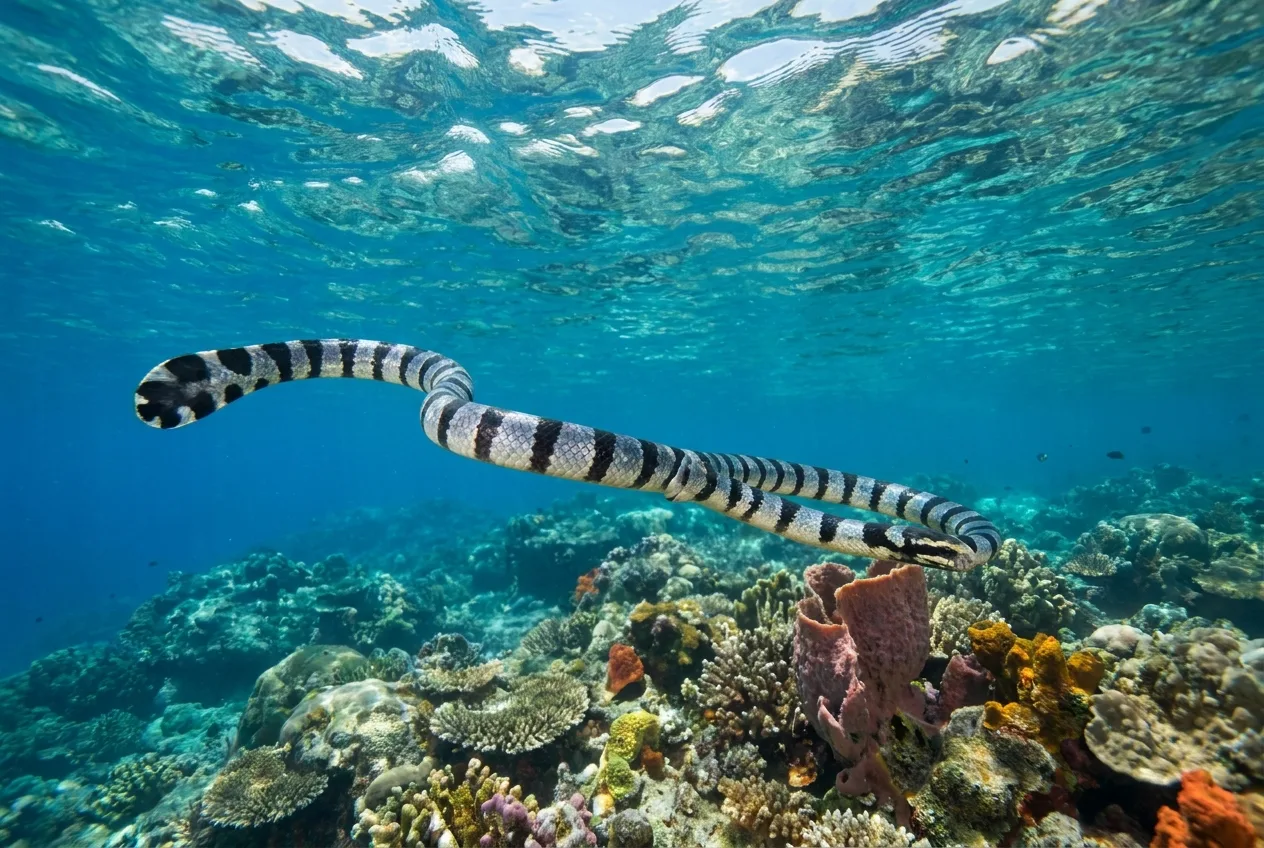
5. Sea Snake: Calm Can Be Deceptive
Sea snakes are reptiles adapted to life in the water. Most are not aggressive toward people and prefer to move away. Even so, their venom is several times more potent than that of land snakes such as cobras. Bites are rare and usually occur when fishers remove them from nets or a diver blocks their route into a rock crevice. They also need to surface to breathe, so never obstruct their path. Give them room and enjoy watching from a distance.
Give Marine Life Space
Recognizing these animals and respecting their space helps make diving safer and more enjoyable. Maintain neutral buoyancy, watch where you put your hands and enjoy observing. For guidance on first aid for marine life injuries, consult specialist resources from organizations such as Divers Alert Network (DAN). To discover more about the underwater world, visit our blog or get in touch.
Explore our canvas prints

Underwater Photography


Underwater Photography


Underwater Photography
Underwater Photography