

Blog, Underwater
How to Prepare for a Safe Dive Trip
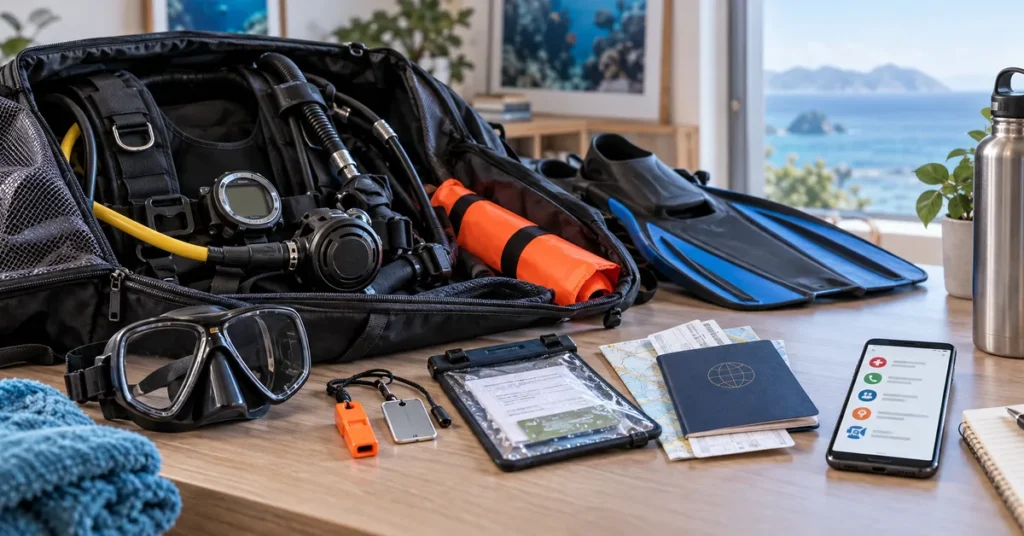
A safe dive trip starts at home, because DAN says travel and dive preparations include factors that affect safety both before departure and after arrival at the destination.1 That means planning for accessibility, communication, documents, medical fitness and conservative decisions in the water.1
DAN World reminds divers that on every dive they should plan the dive and dive the plan, dive with a buddy, complete pre-dive checks and know in advance what to do if they become separated underwater.2
What to Know Before You Dive
Before choosing a destination, DAN recommends thinking about accessibility, because if it takes a long time to reach a place, getting out of it in an emergency can also take a long time.1 DAN adds that in some remote areas aircraft can take off and land only during daylight hours, which can lengthen an evacuation.1
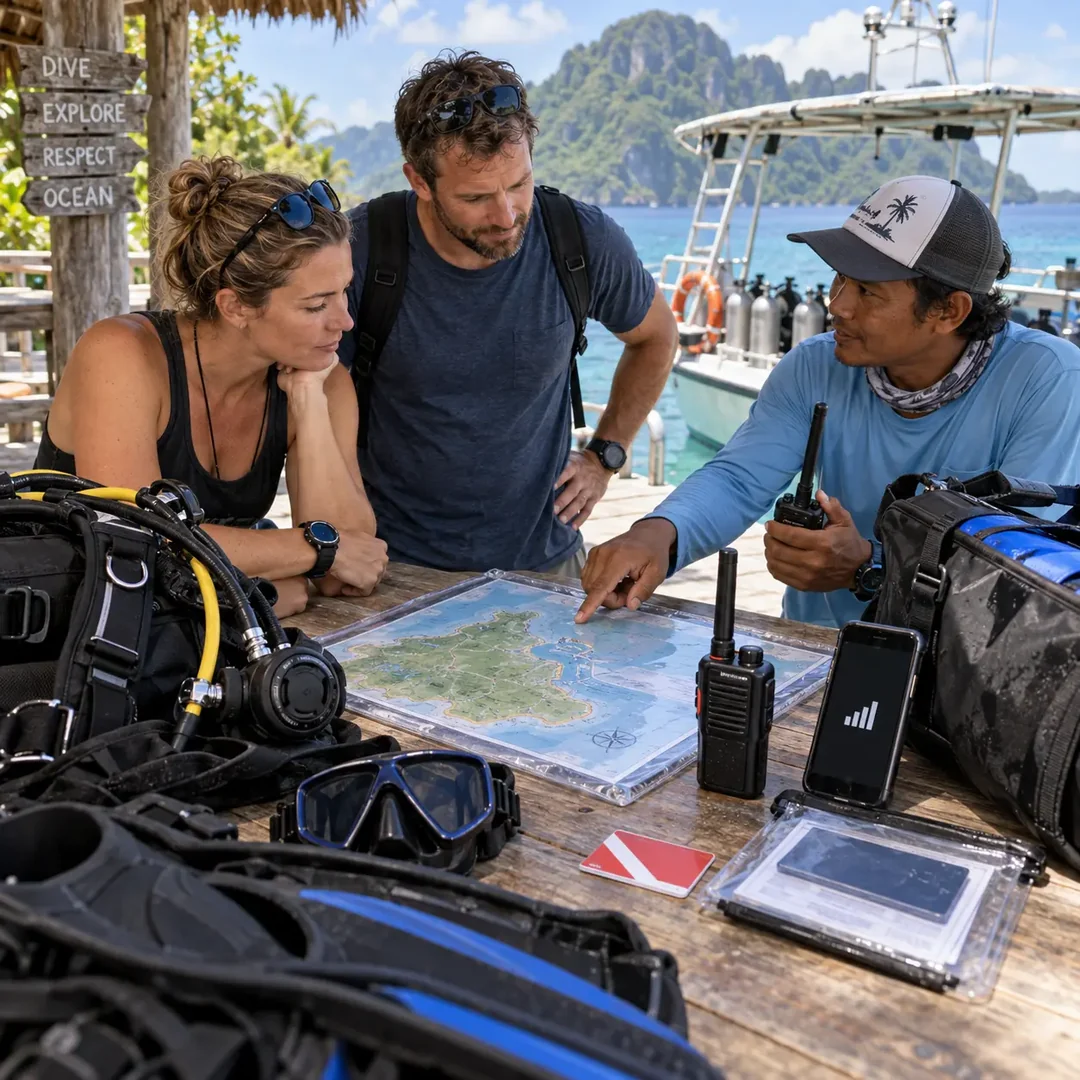
Communication is also part of preparation, not just vacation convenience.1 DAN recommends checking what communication options will be available in an emergency, including ship-to-shore contact, cellular coverage, wireless internet, SMS and communication apps.1
Paperwork is less exciting than the sea, but DAN notes that it can matter: passport, ID, DAN membership card, information about medications, allergies and medical history, and emergency contact details on the dive operator’s form.1
Every Diver Should Travel With a Surface Marker Buoy and One or More Signaling Devices.
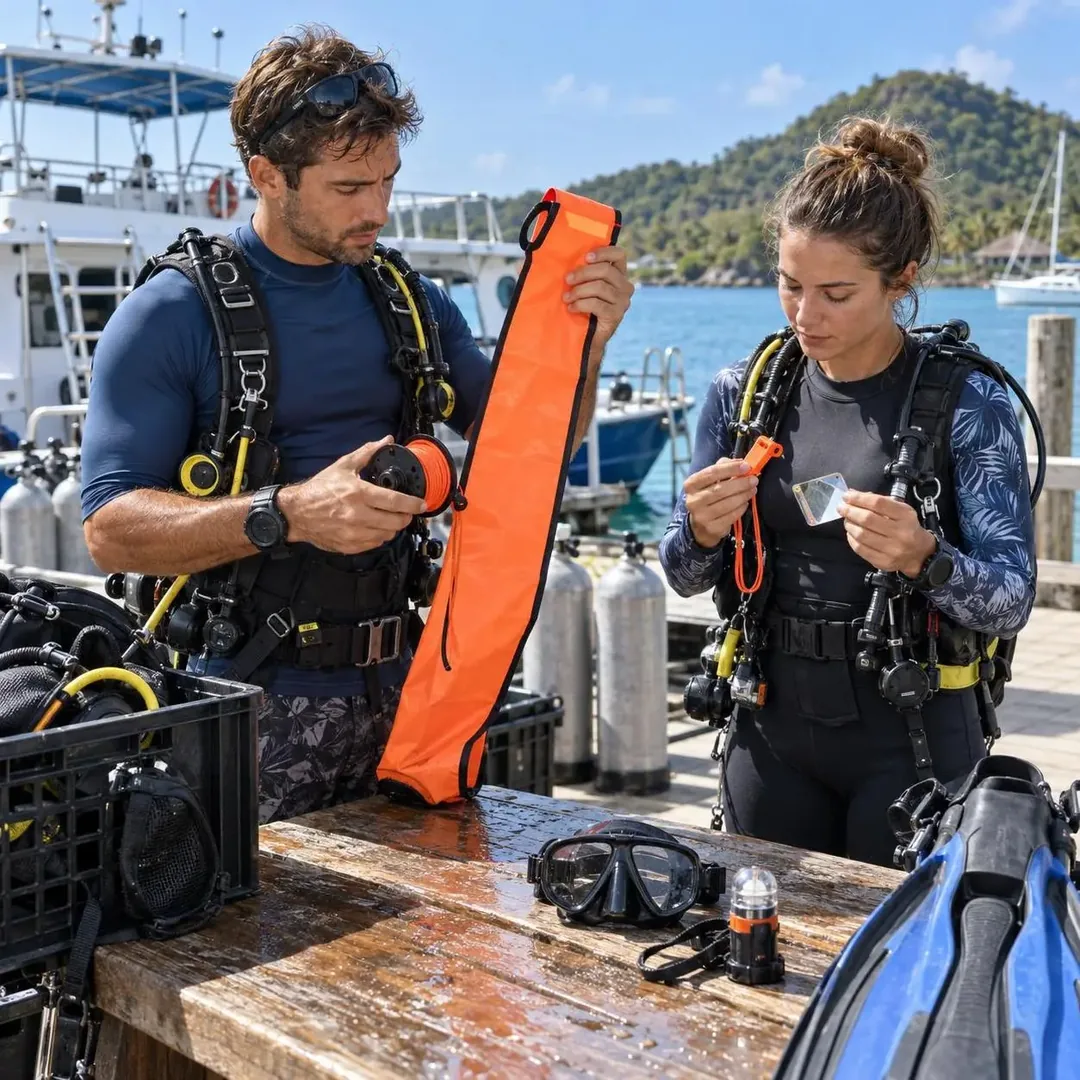
DAN recommends that every diver travel with a surface marker buoy and one or more signaling devices.1 DAN World adds that when new gear is involved, such as a surface marker buoy, divers should practice deploying and stowing it before the dive.2
On a trip, a marker buoy and signaling devices are part of the ability to be seen and attract attention when needed.1 At the same time, DAN World stresses that gear should be easy to use, adjustable and suitable for the type of diving being planned.2
Save DAN’s Emergency Hotline, +1 (919) 684-9111, in Your Phone Along With Your Membership Number.
DAN recommends saving the DAN emergency hotline, +1 (919) 684-9111, in your phone together with your DAN membership number.1 It also recommends updating emergency contacts, address, phone numbers and email address in your DAN account.1
DAN notes that an email address can help if you do not have cellular reception while traveling and need to communicate with DAN TravelAssist.1
Consider Seeing a Doctor for a Routine Physical to Evaluate Fitness to Dive.
DAN recommends considering a visit to your doctor for a routine physical to evaluate fitness to dive, and asking the dive operator for the medical form it uses so you can bring it to the appointment.1 It notes that in many cases a “yes” answer on the RSTC medical statement, used by many dive operators, will trigger a requirement for a doctor’s approval to dive.1

The Merck Manual lists specific medical contraindications to diving, including active asthma, COPD, history of spontaneous pneumothorax, heart failure, significant ventricular arrhythmias, seizure disorder, recurrent syncope, upper respiratory infection and pregnancy.3
Reduce the Risk of Decompression Sickness by Diving Conservatively.
DAN recommends reducing the risk of decompression sickness by diving conservatively, getting acquainted with your dive computer and learning how to program it to conservative settings.1 It notes that deep, aggressive dives can allow visits to less frequently visited sites, but they increase the risk of decompression sickness.1
DAN World reminds divers to breathe regularly, never hold their breath and ascend slowly from every dive.2 It also recommends checking the pressure gauge regularly during the dive and making sure there is enough air for the dive and return according to the half or third rule.2
One of the Best Safety Practices Is Extending Time in the Shallows Beyond the Recommended Three-Minute Safety Stop.
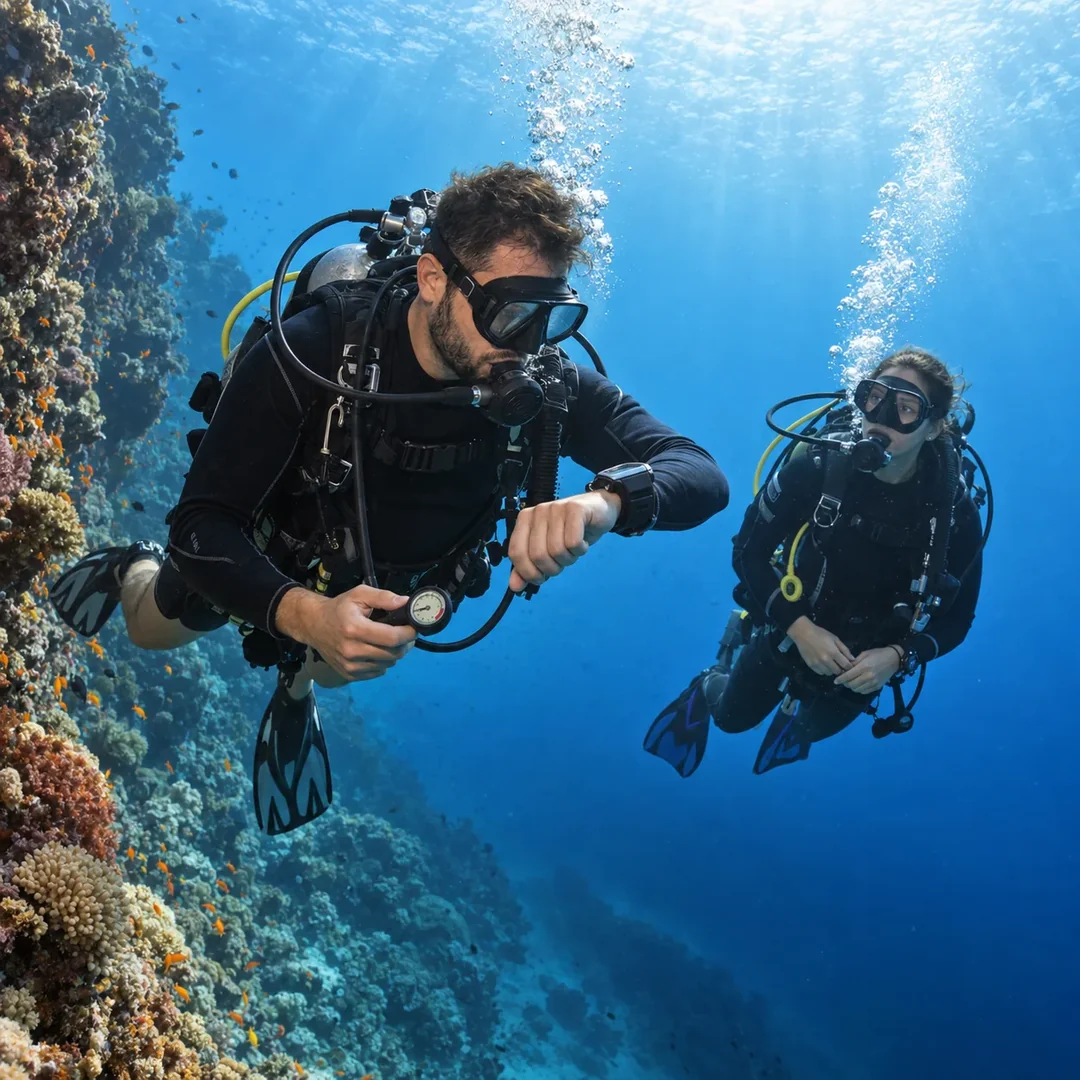
DAN says one of the best safety practices a diver can adopt is to extend time in the shallows beyond the recommended three-minute safety stop or decompression obligation.1 It qualifies this by saying divers should account for staying warm, other divers’ preferences and remaining daylight.1
DAN World says a safety or decompression stop should be made with at least 500 psi or 35 bar remaining, so that figure belongs to the end of the dive and the stop, and does not replace full gas planning at the start of the dive.2
A Diver Must Recognize Environmental, Physical and Physiological Limits Before Every Dive.
DAN World calls on divers to increase awareness of the tangible and intangible limitations they face before every dive, including environmental, physical and physiological issues.2 In the same spirit, it reminds divers not to dive beyond their training limits.2
DAN World notes that there is nothing wrong with saying “I’ve never done this” or “I’ve never used this piece of equipment before and I need your help.”2 On a trip, rented gear, an unfamiliar site or a new operator can add load before the dive has even begun.2
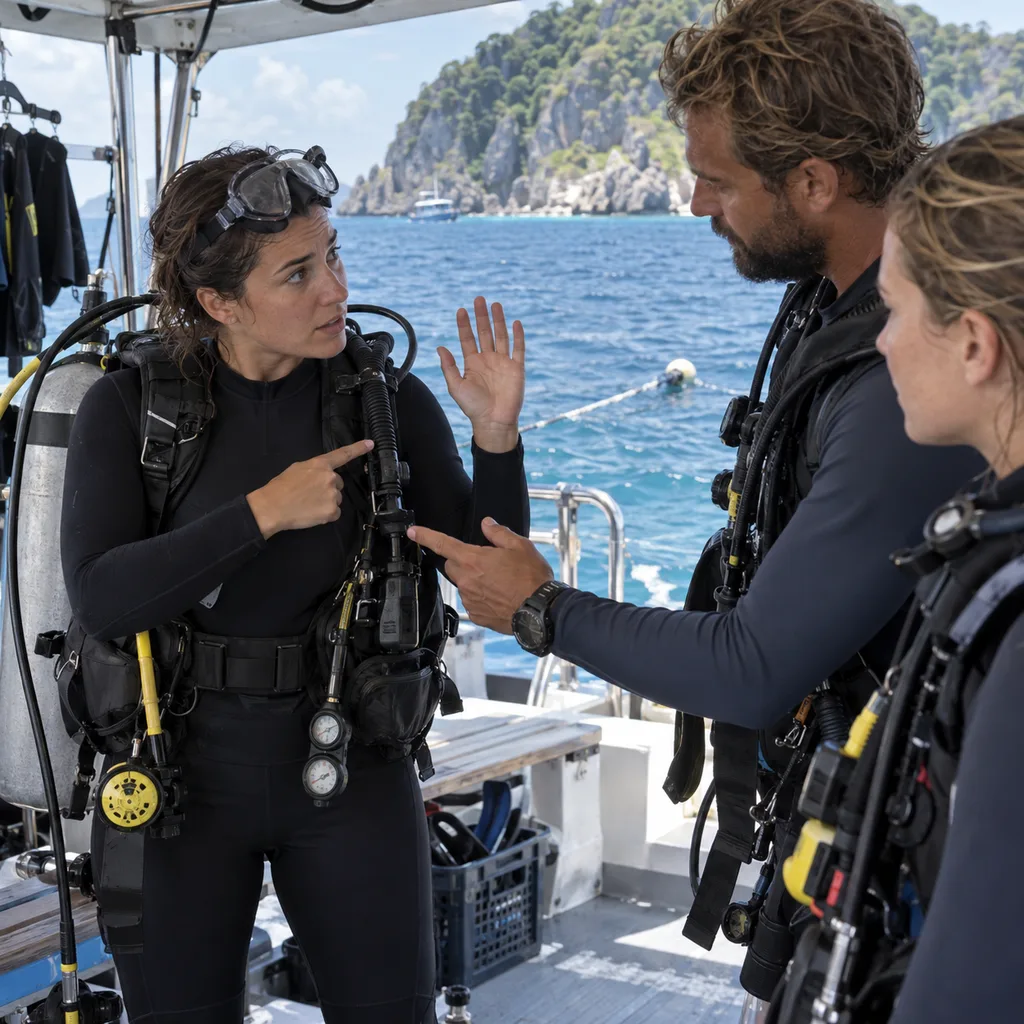
Safety and Responsibility in the Water
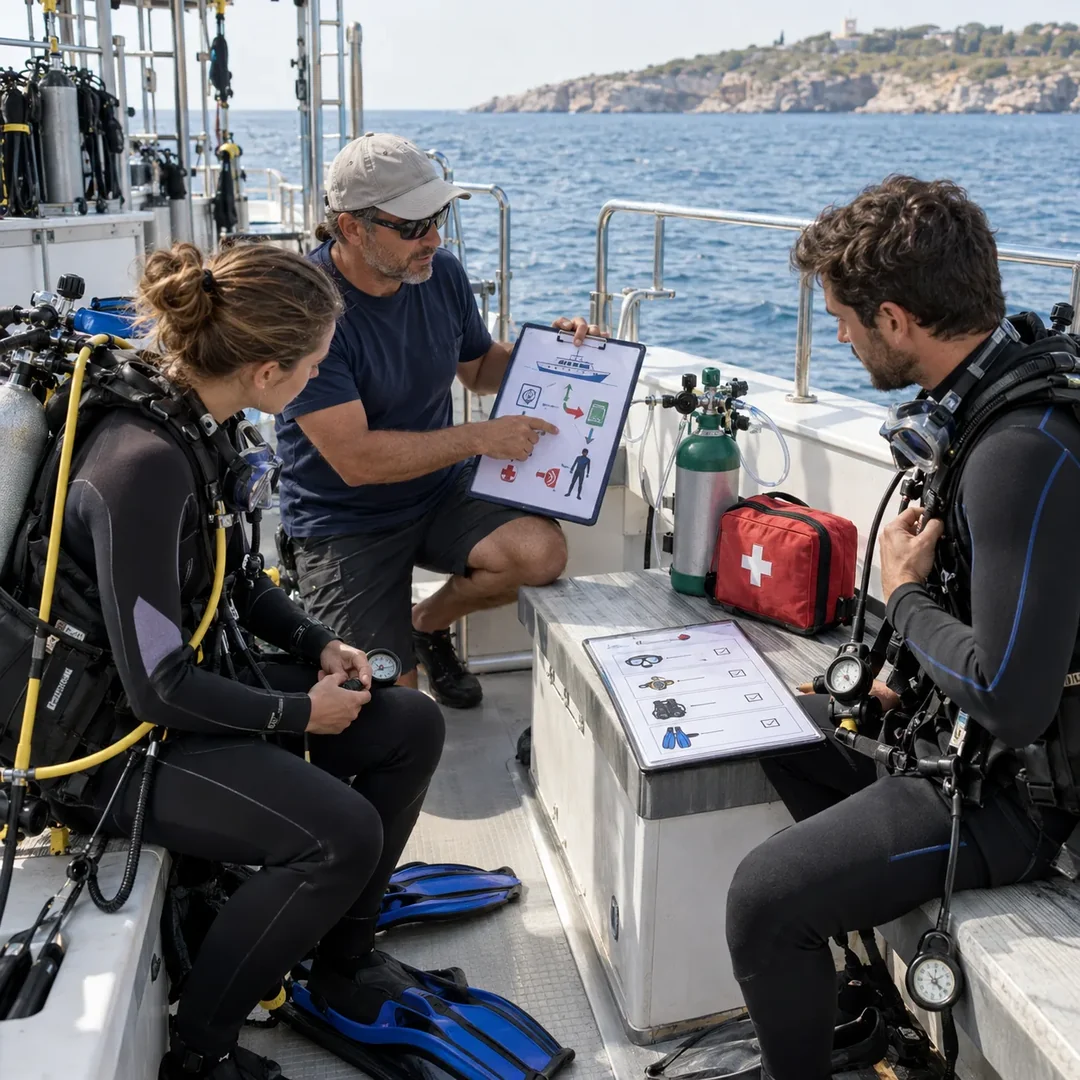
DAN recommends choosing a dive operator based on reputation and, if possible, references from friends, and getting a sense of its attention to safety before diving.1 Among the questions it suggests asking are whether there is an emergency action plan, an accessible first-aid kit, an oxygen unit, enough oxygen for multiple divers at least until reaching shore, and whether staff are trained in first aid, neurological exams and proper oxygen use.1
DAN World describes equipment as the diver’s lifeline underwater, and therefore recommends inspecting it before every dive and reviewing safety equipment as well.2 It adds that divers should use a pre-dive checklist, get unclear instructions explained, become familiar with the dive site and entry and exit points, and have an emergency action plan ready.2
Frequently Asked Questions
What should you check with your buddy before a dive trip dive? 2
You should plan the dive with your buddy, review hand signals, decide what to do if separated, and determine when and how you will end the dive.2 DAN World also says divers should dive with a buddy and get to know that buddy.2
Which documents and emergency details should you prepare before travel? 1
DAN recommends keeping important documents such as a passport, ID and DAN membership card, and also including personal health information such as medications, allergies and medical history.1 It suggests considering several copies of important documents and leaving one copy at home, one with a trusted companion or dive operator, and one in a wallet or luggage.1
Is it okay to dive when something does not feel right? 2
DAN World puts it simply: if it doesn’t feel right, don’t do it.2 On a dive trip, a new destination, unfamiliar gear or group pressure can blur a feeling of discomfort that is worth listening to.2
Sources
- Prepare for Safe Dive Travel
- Safe Diving Practices – DAN World
- Table: Specific Medical Contraindications to Diving-Merck Manual Professional Edition
Explore our canvas prints


Underwater Photography


Underwater Photography


Canvas Prints


Underwater Photography