

Blog, Underwater
Dive into the Silent World: My Underwater Photography Exhibition
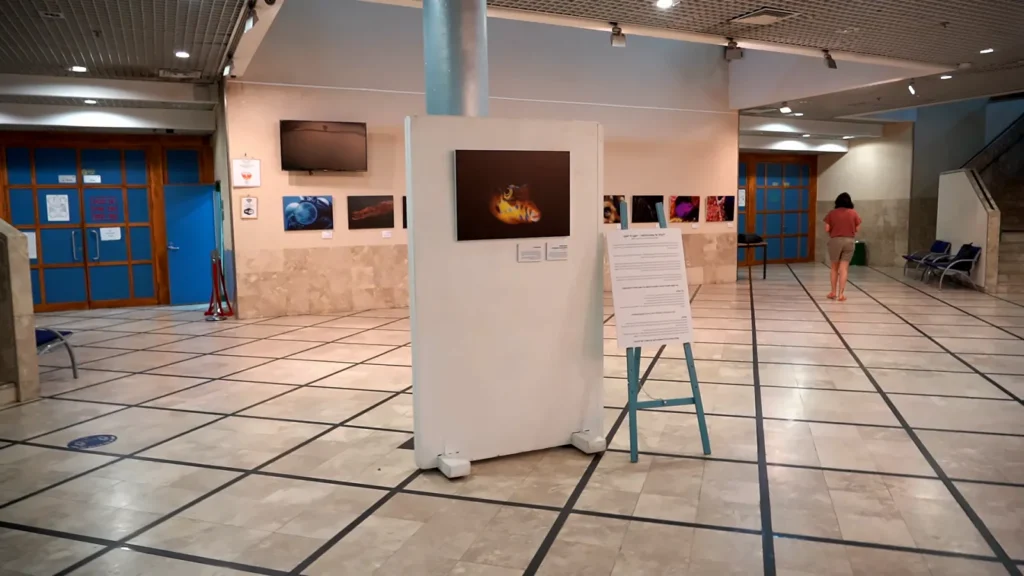
My underwater photography exhibition, “Dive into the Silent World”, ran from 8 February to 5 March 2023. The same words appear on this site, and I chose them for a reason. Underwater, there is a quiet unlike anywhere else. Within that quiet, the colors, shapes and animals have your full attention.
The walls and display panels brought together my underwater photography from more than 20 years of diving: in the Red Sea, Jardines de la Reina in Cuba, and Palau in the Pacific Ocean. Beside each photograph was a small label with the animal’s common name, its scientific name and a short story.
Contents
A Short Tour of the Exhibition
This video was filmed in the hall on the exhibition’s final day. Take a little over a minute to wander through the underwater photography exhibition, from one wall to the next:
Why the Silent World?
I’ve been hard of hearing since birth, diving for more than 20 years and taking photographs since I was young. In the exhibition’s opening text, I wrote:
As someone who is hard of hearing, I find refuge in diving. The noise of everyday life gives way to shapes and colors, and my reliance on hearing aids gives way to an exhilarating sense of freedom.
Reef animals aren’t always willing to cooperate. Most are shy, and some are startled by the sound of bubbles or the camera’s flash. In underwater photography, the animals direct the scene. All we can do is join them, take a photograph and hope it captures a little of the magic of being there.
A Few Stories Behind My Underwater Photography
Each underwater photography print in the exhibition had a label with a short story. Here are a few of them.
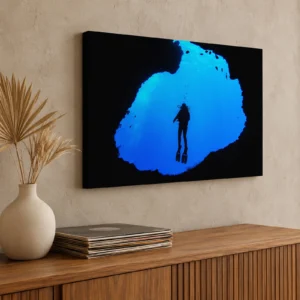
The Diver in the Blue Hole
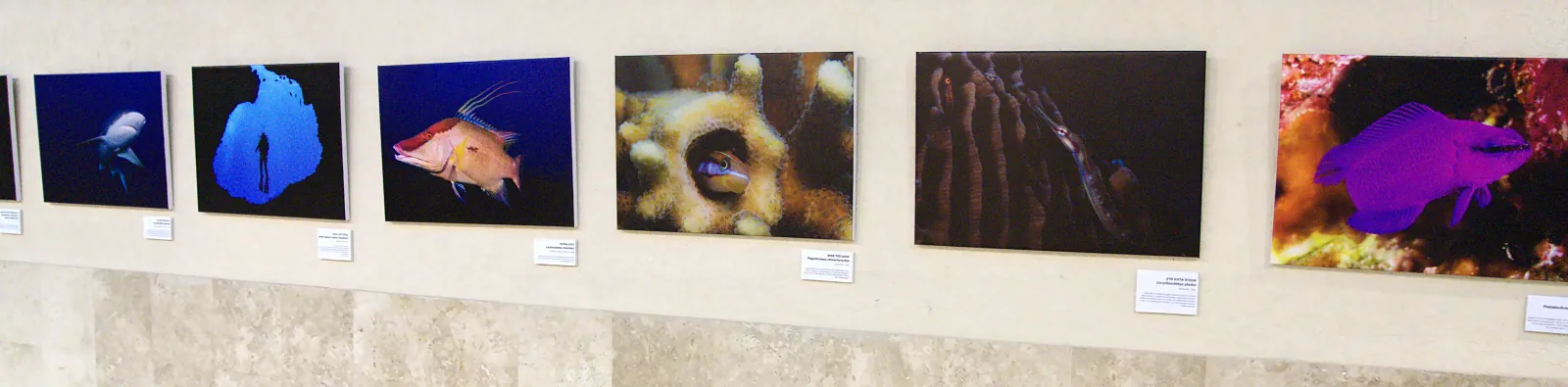
I love this photograph. I caught Haya, my wife and dive buddy, in the center of Palau’s Blue Hole as we emerged from a large cave into the sunlight. So much of underwater photography comes down to composition: where everything sits in the frame, what is in front of it and what is behind. At the exhibition, its title was “The (Un)common Diver”, Homo sapiens sapiens aquaticus.
Nino the Crocodile
On a past trip to Jardines de la Reina, south of Cuba, we met Nino, an American crocodile, among the mangrove islands. The crew fed him a chicken before we entered the water with masks and snorkels to photograph him.
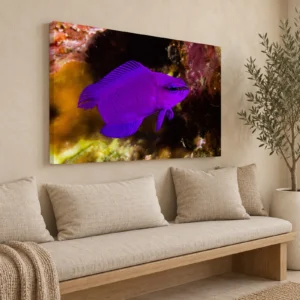
Fridman’s Dottyback
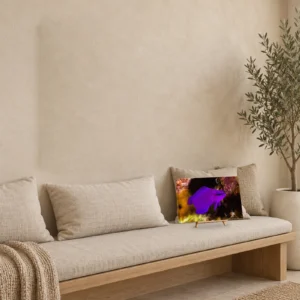
This tiny purple fish, just 5 to 8 cm long, was first described by Klausewitz in 1968 and named in honor of David Fridman. It is endemic to the Red Sea, meaning it lives only there. You might want to bring a magnifying glass.
A Moon Jelly at the Safety Stop
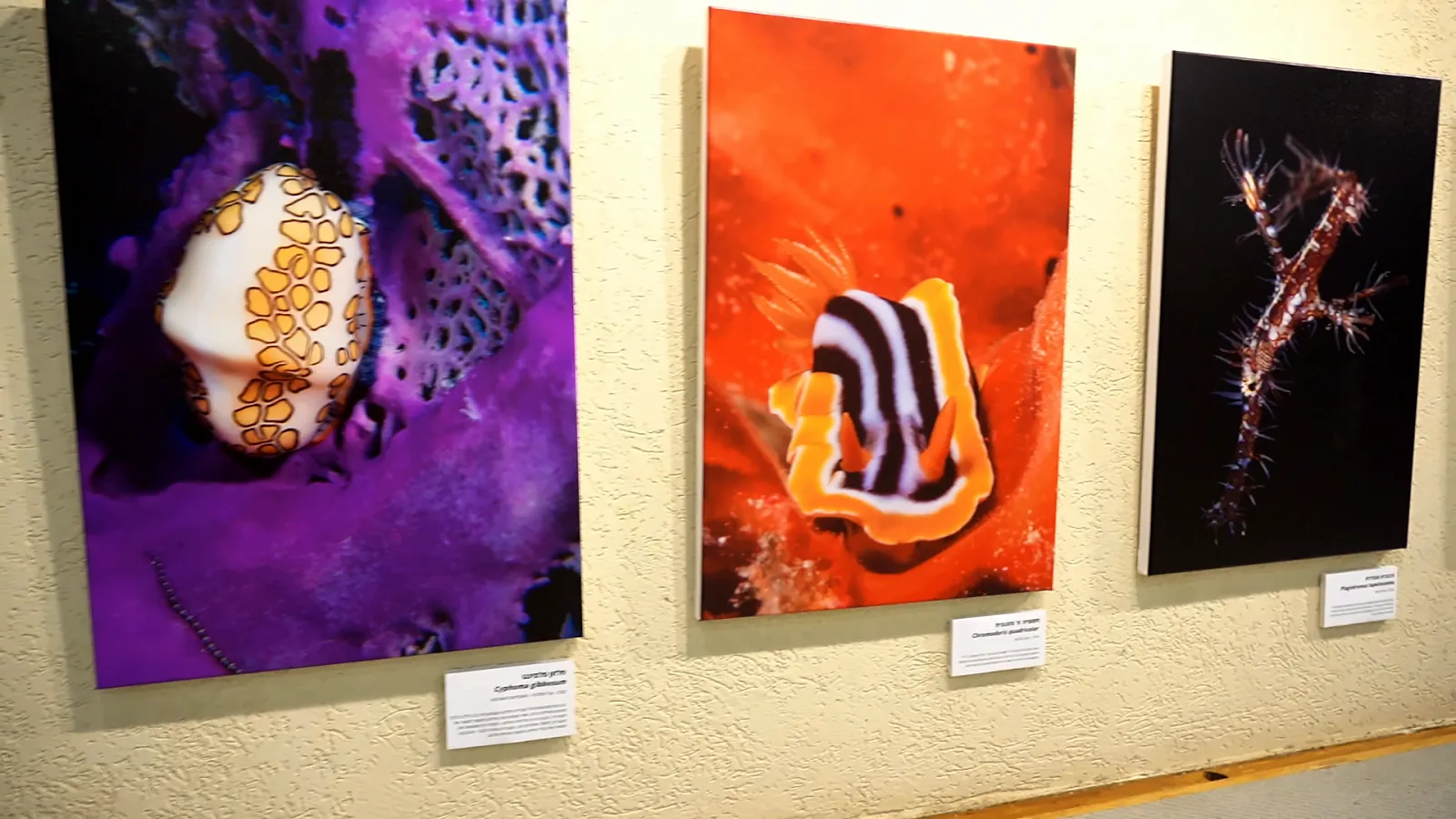
In spring, the bay where I dive in the Red Sea fills with jellyfish. Moon jelly stings are usually mild. During a safety stop at the end of a dive, one drifted between my buddy and me. My camera was ready, and the photograph turned out beautifully. It was one of those underwater photography moments that came together entirely by chance.
The Crooked Green Moray
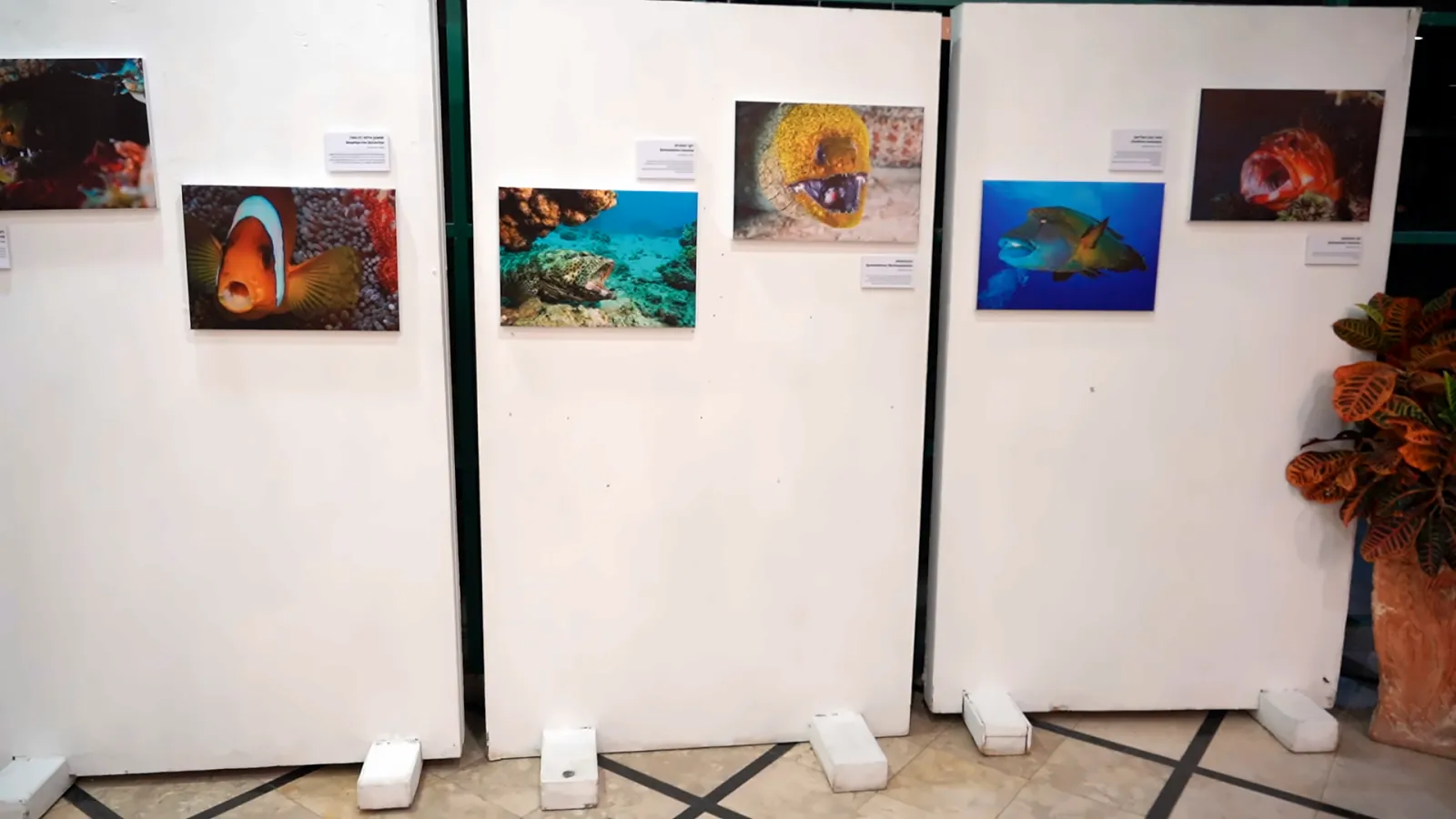
A little funny, a little misshapen and a little crooked: this moray surprised us in Cuba, hiding beneath the coral. Once we’d stopped laughing, we took a photograph to remember it by. I love this image because it reminds me how beautiful nature is, even when it isn’t perfect.
Jellyfish Lake in Palau
Jellyfish Lake in Palau is a rare natural phenomenon. Its golden jellyfish still have stinging cells, although their sting is very mild. The familiar story that they lost their sting because the lake has no predators is a myth: sea anemones in the lake prey on the jellyfish. After an exhausting walk up and down steep steps, we reached the lake, surrounded by greenery. Jellyfish surrounded us in the water. It felt strange, slimy and a little unnerving at first.
The Wire Coral Goby
You’ll find this tiny goby on wire corals. It grows to about 4 cm, and adults usually live in pairs. Research on its reproductive anatomy suggests a capacity to change sex in either direction.
Schultz’s Pipefish
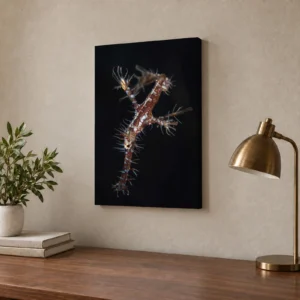
This pipefish is a distant relative of seahorses. Its partly transparent body is covered in stripes that help it hide from predators among the corals. As with seahorses, the male carries the fertilized eggs in a pouch beneath his tail. After the young hatch, he releases them into the water.
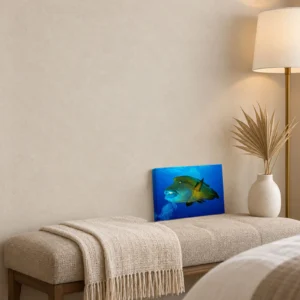
The Humphead Wrasse (Napoleon Wrasse)
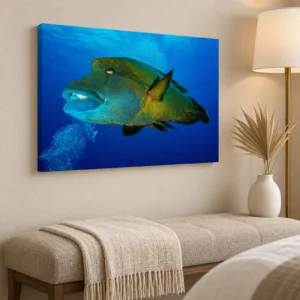
Divers call it “Napoleon”. The humphead wrasse lives in the Indian and Pacific Oceans. It feeds mainly on mollusks, including snails, and even eats poisonous animals such as crown-of-thorns starfish, sea hares and boxfish. It can reach 2 meters in length, and meeting one is an unforgettable experience.
The Caribbean Reef Shark
The Caribbean reef shark is common on Caribbean coral reefs and is one of their large predators. It can grow to about 3 meters long. It sometimes rests motionless on the seabed.
The Hawkfish (Cirrhitichthys oxycephalus)
Divers call it a hawkfish. This tiny, agile fish likes to perch on a coral branch and lie in wait for invertebrates and smaller fish. Unlike many other fish, hawkfish have no swim bladder, so they cannot stay afloat in the water. When they stop swimming, they sink or settle down on a perch.
The Frogfish
Frogfish are extraordinary fish. Their coloring conceals them so well that, when they stay still, they look like part of the reef. Between their eyes is a little fishing rod with a lure at its tip. They wave the lure above their heads. When a small, curious fish approaches, the frogfish swallows it whole in an astonishing lunge.
What a Small Label Can Teach You
Even after years of underwater photography, identifying marine animals isn’t easy. Some change color, some are shy, and others disguise themselves as different animals to defend themselves or deceive. The bluestriped fangblenny, for example, impersonates a cleaner fish. When an unsuspecting fish visits its “cleaning station”, it takes a bite and darts back into hiding.
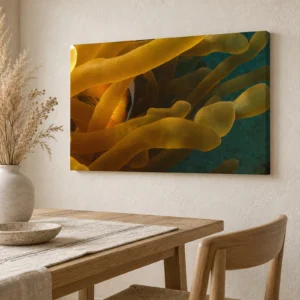
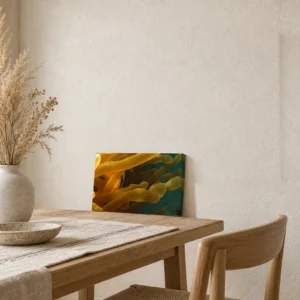
The Red Sea anemonefish lives in the Red Sea and Gulf of Aden. Its groups include a dominant female, a breeding male and smaller, sexually immature fish. If the female disappears, the breeding male can become female.
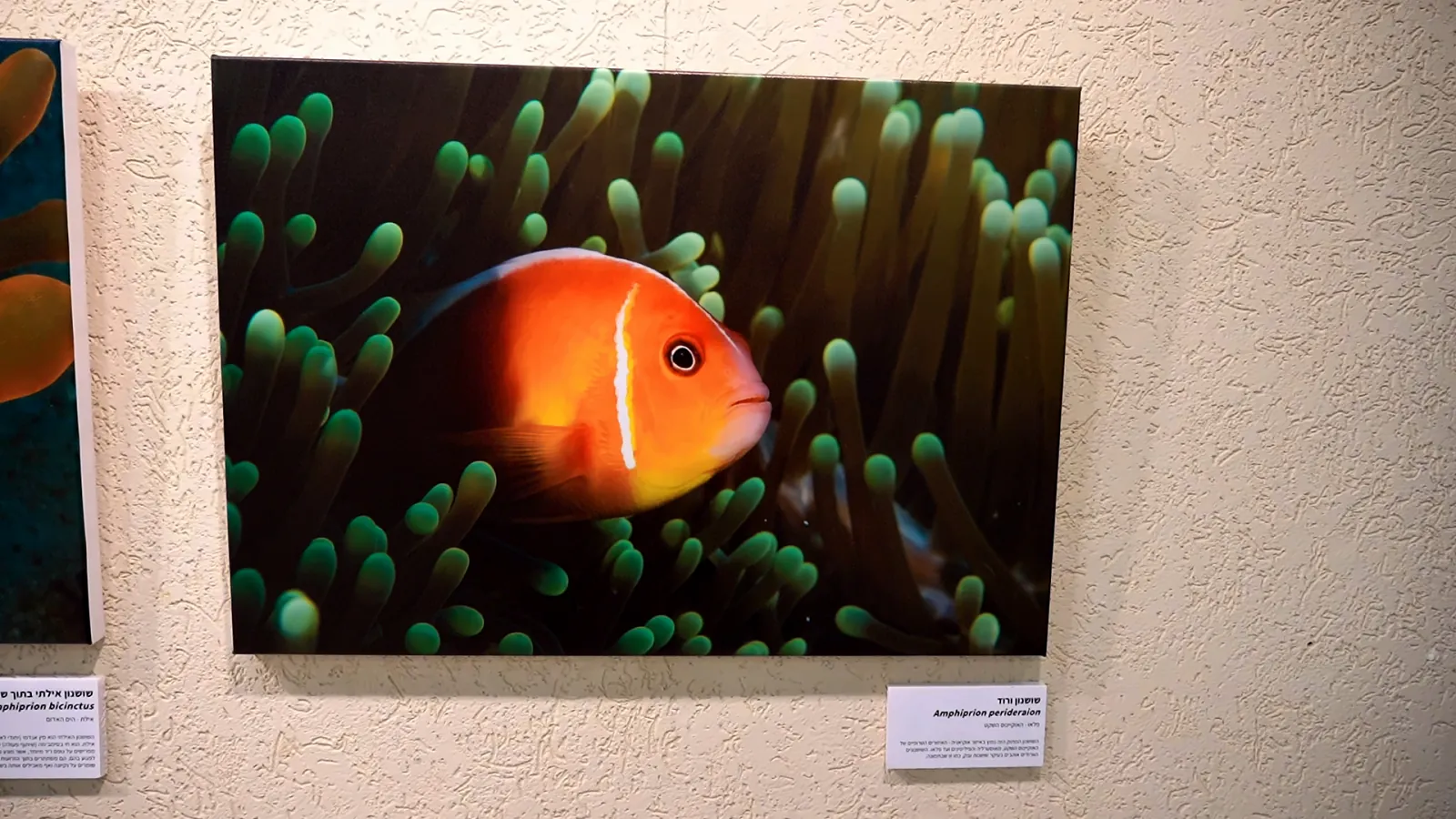
Shabi Shabat, Elad Rachmilovitz and Yechiel Kuperman, dear friends with scientific expertise, helped me identify, classify and catalog the animals in the photographs.
Thank You
Thank you to the gallery that hosted my underwater photography, to Amir Bloom for the prints, and to Haya, my wife and perfect dive buddy, who encouraged me to put the exhibition together. Thank you to everyone who dived with me over the years, including Elad and Yechiel, and to everyone who helped me along the way. And a huge thank you to everyone who came to see it. It meant a lot to me.
Underwater Photography from the Exhibition as Canvas Prints
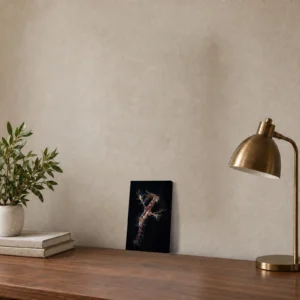
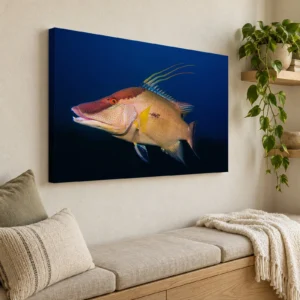
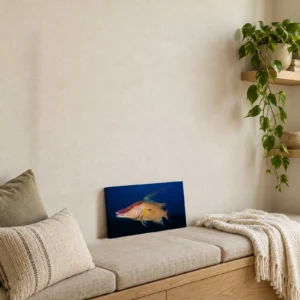
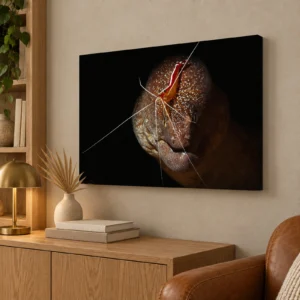
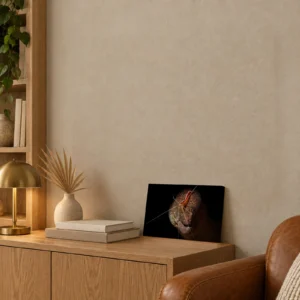
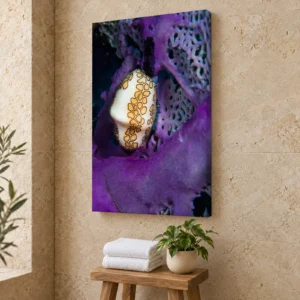
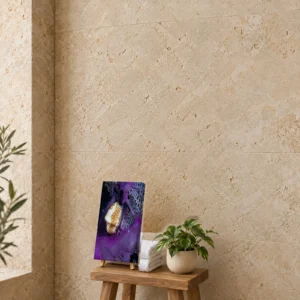
Many of the photographs from the exhibition are now available in the shop. You can order an underwater photography print on canvas in a choice of sizes and bring a little of the silent world to a wall in your own home. Here are a few of them:


Browse all photographs in the shop
Explore our canvas prints
Canvas Prints


Underwater Photography
Underwater Photography


Underwater Photography