

Underwater
The Safety Stop: Why It Matters and What Happens in Three Minutes
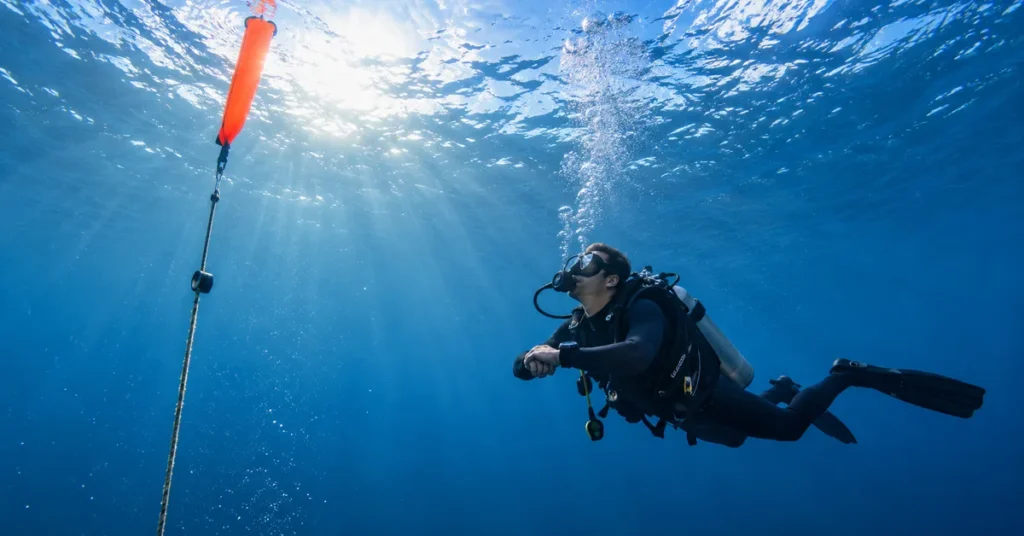
Before You Dive
A safety stop is one part of a well-managed ascent. Its value sits alongside gas planning, awareness of conditions and personal responsibility in the water 1.
During a dive, the body absorbs inert gases and begins releasing them during the ascent. BSAC therefore recommends planning and monitoring dives with a dive computer or decompression tables 2.
Decompression sickness can develop even when a dive stays within computer or table limits. DAN emphasises building modest safety margins into every stage of the dive 1.
Decompression stress is not always noticeable as it develops. A diver may feel well until a problem has become more serious 1.
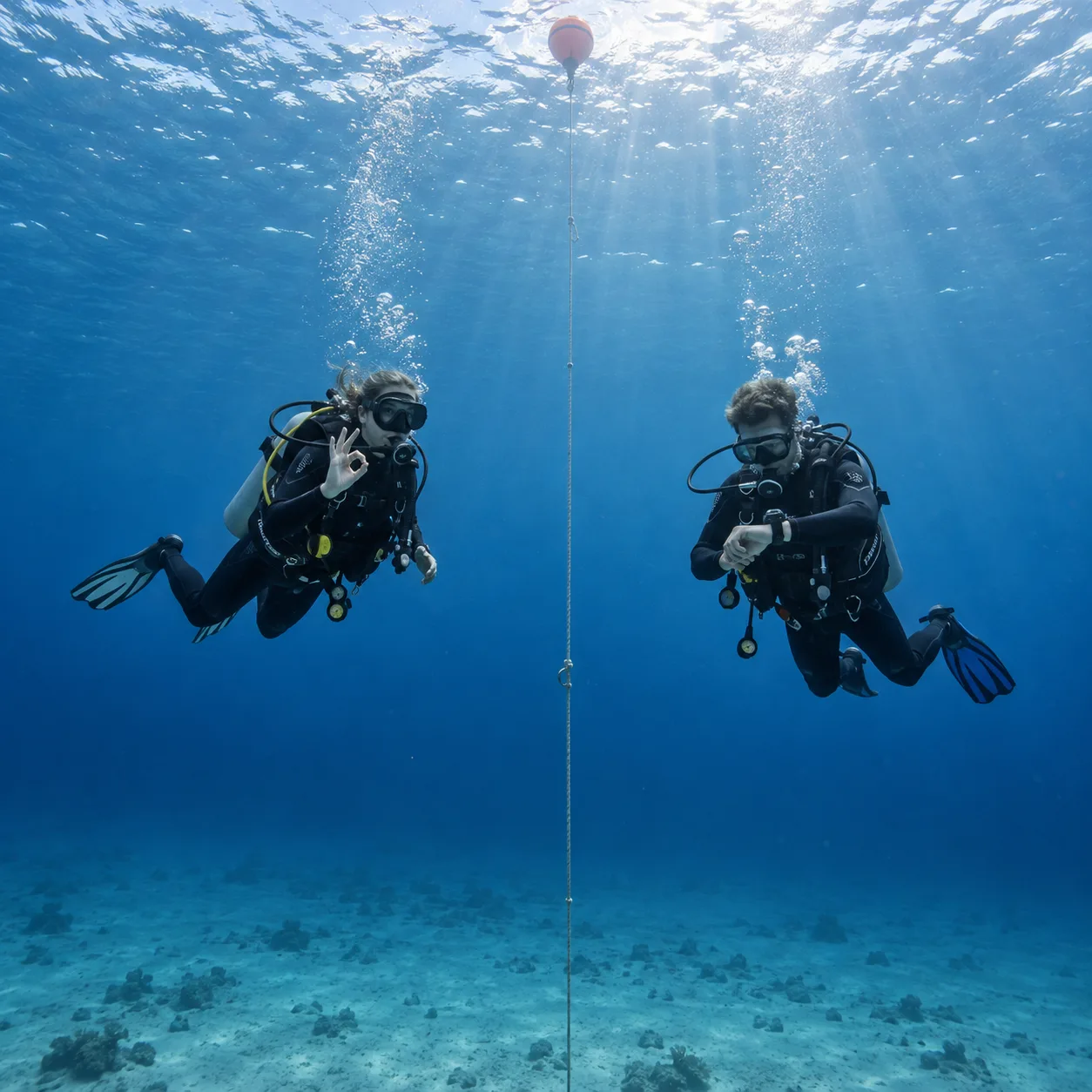
A Safety Stop Allows Time for Inert Gas Elimination
A safety stop during ascent allows time for inert gas elimination 2. DAN discusses a three-minute stop at about 15 feet (5 meters), which also gives divers time to check for boats before surfacing 3.
The stop is also a chance to check the surface and the water overhead before the final ascent 3.
This matters wherever divers share the water with boats, because collisions and propeller strikes are recognised hazards 3.
DAN recommends looking and listening for boats underwater, while recognising that poor visibility and difficulty locating sound can make their direction hard to judge 3.
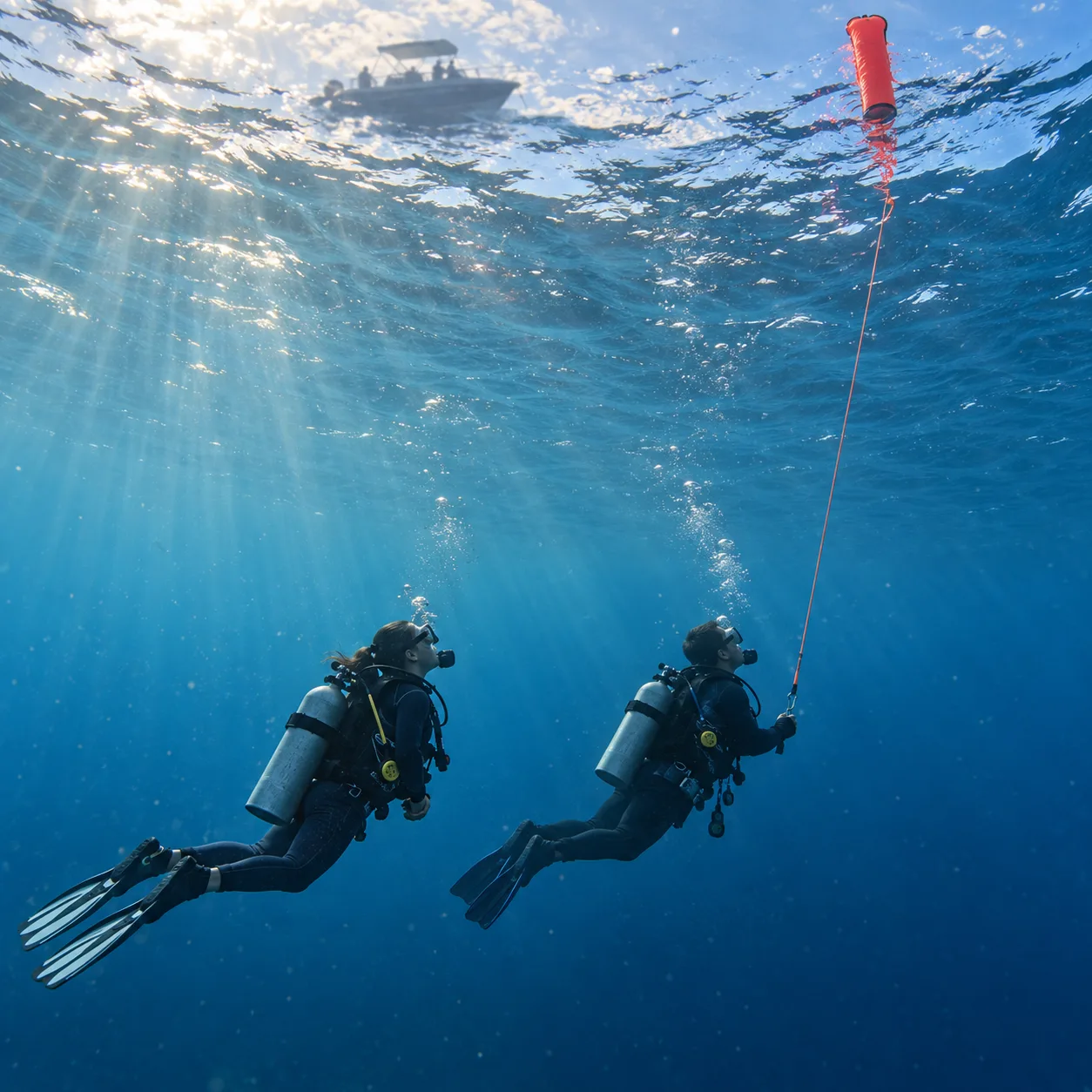
A safety stop therefore does not replace surface signals, a dive flag, a surface marker buoy (SMB), or a plan for communicating with nearby boats 3.
DAN’s 2016 Assessment of Safety Stops
Writing for DAN in 2016, Neal Pollock described the adoption of safety stops as perhaps recreational diving’s most significant decompression safety improvement over the preceding three decades 1.
In practice, the safety stop has become part of a diving culture built around margins, awareness and conservative decisions 1.
DAN notes that dive computers generally work as designed, but their algorithms cannot account for every factor that affects the decompression risk of a particular dive 1.
Responsibility therefore stays with the diver. Active, considered decisions matter throughout the dive 1.
A more constructive message is ‘Do this to improve safety’ rather than ‘Do this or get hurt’. It reinforces good habits even when nothing has gone wrong 1.
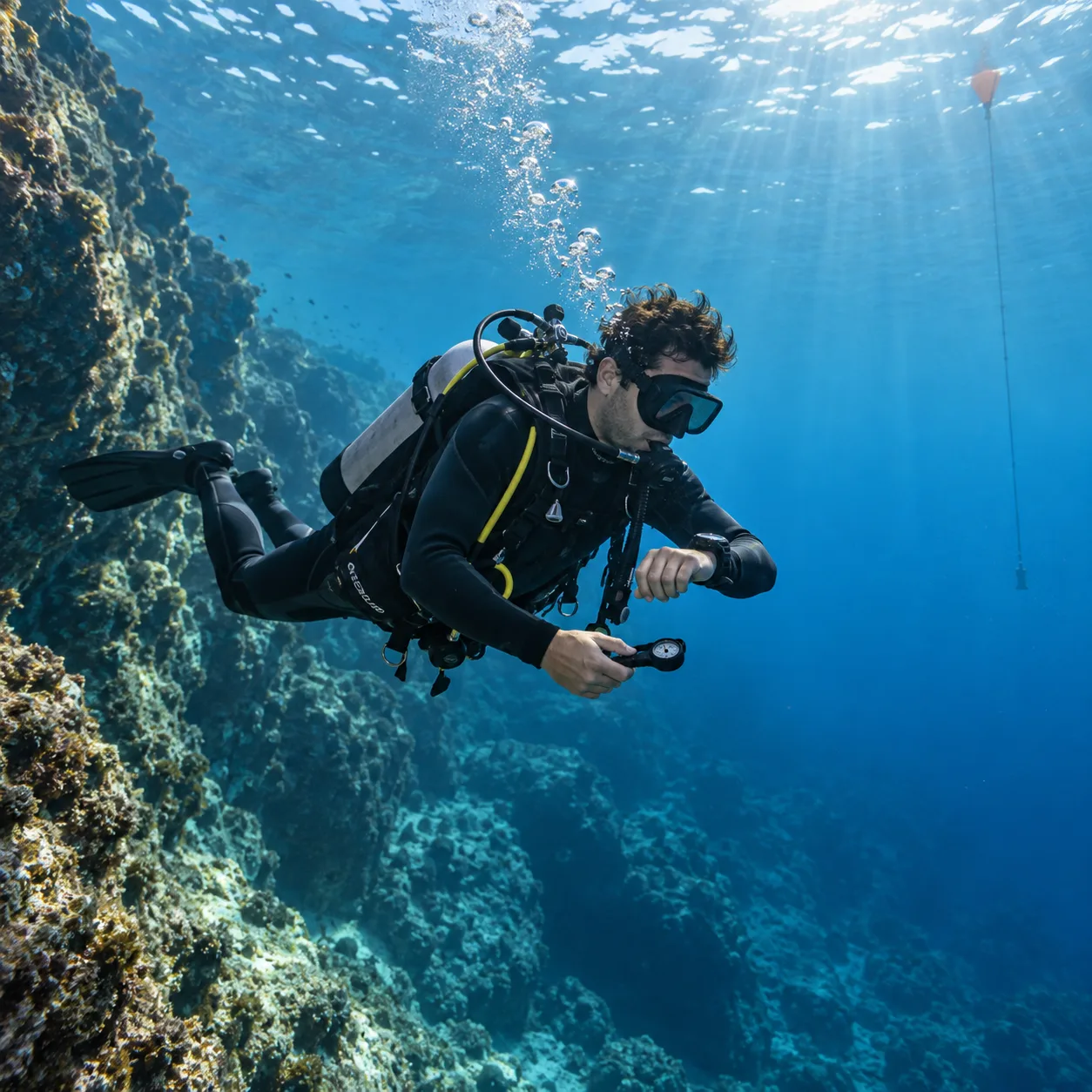
A Three-Minute Stop Offers More Benefit After a Multilevel Dive, Extended as Gas and Conditions Allow.
DAN explains that a three-minute stop is beneficial, with greater benefit when it follows a multilevel profile and is extended as gas supply and conditions allow 1.
A multilevel profile can limit inert gas uptake and allow more time for its controlled release during the dive 1.
For example, swimming out at one depth and returning at a shallower depth can reduce decompression stress while letting the diver explore different parts of the site 1.
DAN identifies time spent in shallow water during the ascent as one of the most useful safety margins, alongside reducing the intensity of the dive itself 1.
Extending a stop still calls for judgement. Available gas, conditions and the ability to control depth all matter 1.
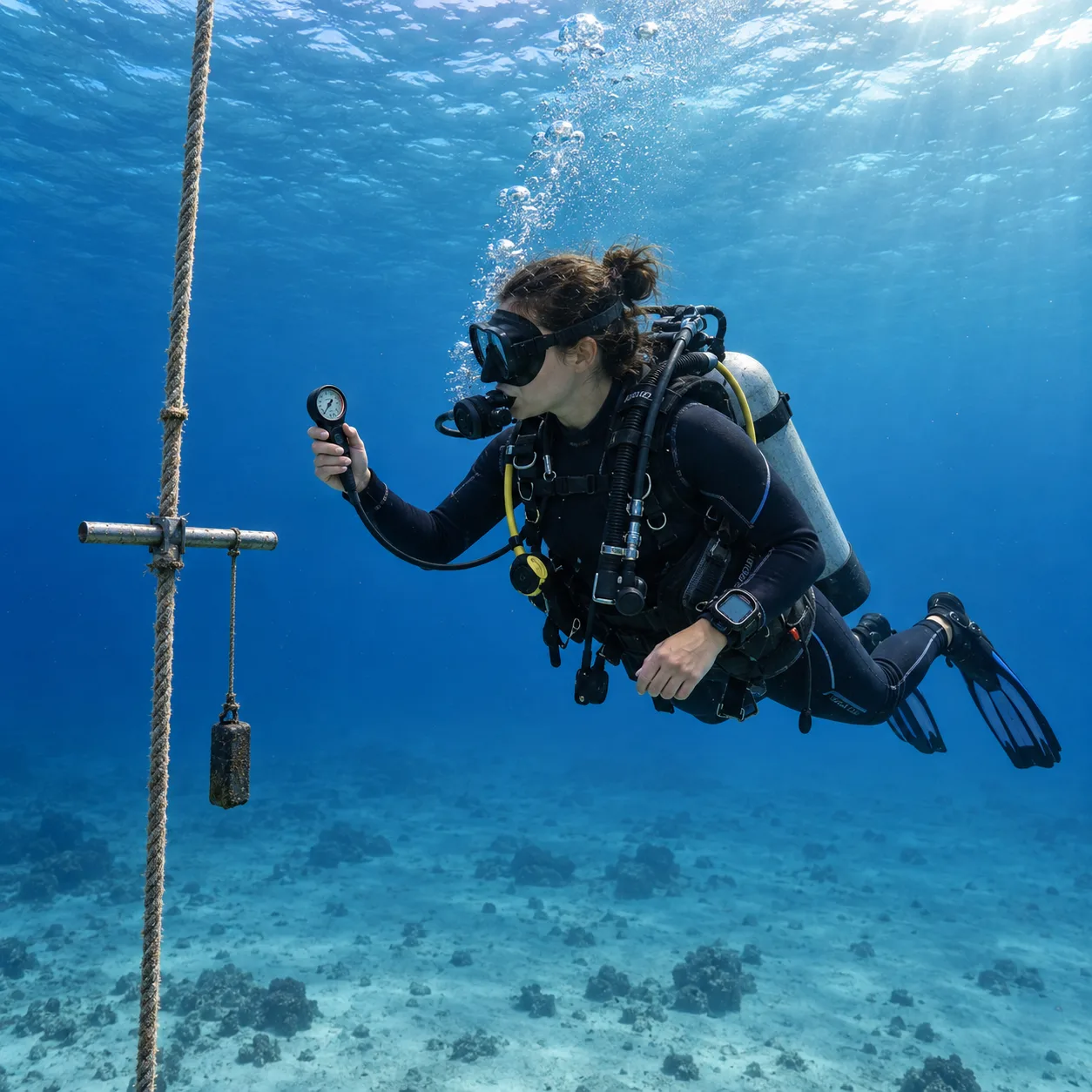
BSAC Recommends a Safety Stop of at Least One Minute at Around 6 Metres; Longer Stops Offer More Benefit.
BSAC recommends a safety stop of at least one minute at around 6 metres when it is safe to do so, and notes that longer stops offer more benefit 2.
The same guidance describes safety stops as optional and recognises circumstances in which omitting one and ascending directly to the surface makes more sense 2.
Examples include running low on gas or sea conditions that make accurate depth control difficult 2.
BSAC also recommends a slow ascent from 6 metres to the surface, taking at least one minute 2.
The distinction matters: a safety stop adds a useful margin, while a controlled ascent and a response suited to actual conditions take priority over blindly following a rule 2.
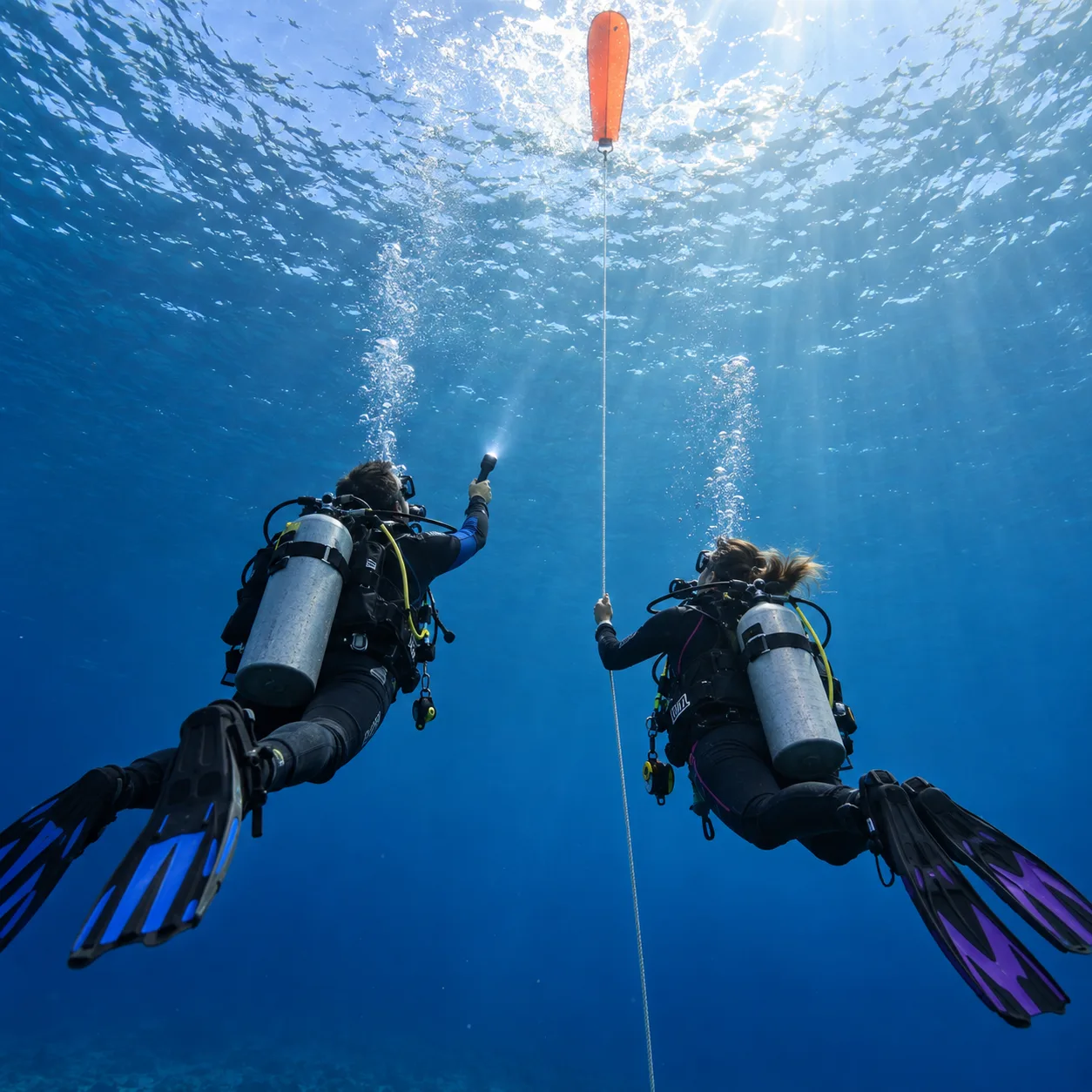
Safety and Responsibility in the Water
When conditions prevent a well-controlled safety stop, the decision should rest on gas supply, sea conditions, depth control and the dive plan, rather than a wish to tick a procedural box 2.
A required decompression stop is different from an optional safety stop. BSAC advises that a diver who misses required decompression must not re-enter the water to complete it. Treat the diver as a possible decompression illness casualty even without symptoms: call emergency services immediately, provide first-aid oxygen if available and you are trained to use it, and follow medical advice 2.
DAN advises divers in areas with boat traffic to stay aware of vessels both underwater and at the surface, and to use suitable signalling equipment 3.
DAN also warns against assuming a boat operator has seen a diver at the surface. Sun glare, waves, weather and other factors can make a diver difficult to spot 3.

A safety stop brings several good diving habits together: conservative planning, a controlled ascent, gas management and attention to the surroundings. It also reminds us that a profile permitted by a dive computer is not always the most cautious choice 1.
Frequently Asked Questions
When Can a Safety Stop Be Omitted? 2
BSAC describes safety stops as optional. It notes that a direct ascent may be more sensible when gas is low or sea conditions make precise depth control difficult 2.
Why Not Rely Entirely on a Dive Computer? 1
DAN notes that dive computers generally perform as designed, but their algorithms cannot evaluate every factor affecting decompression risk on a particular dive 1.
Can a Safety Stop Help With Boat Awareness? 3
DAN notes that a three-minute safety stop at 15 feet also provides an opportunity to check for boat traffic before surfacing 3.
Sources
- Defensive Dive Profile Planning
- Safe Diving Guide – Decompression
- Boat Collision and Propeller Safety
Explore our canvas prints


Underwater Photography


Underwater Photography


Canvas Prints


Underwater Photography